Stage one: the survey
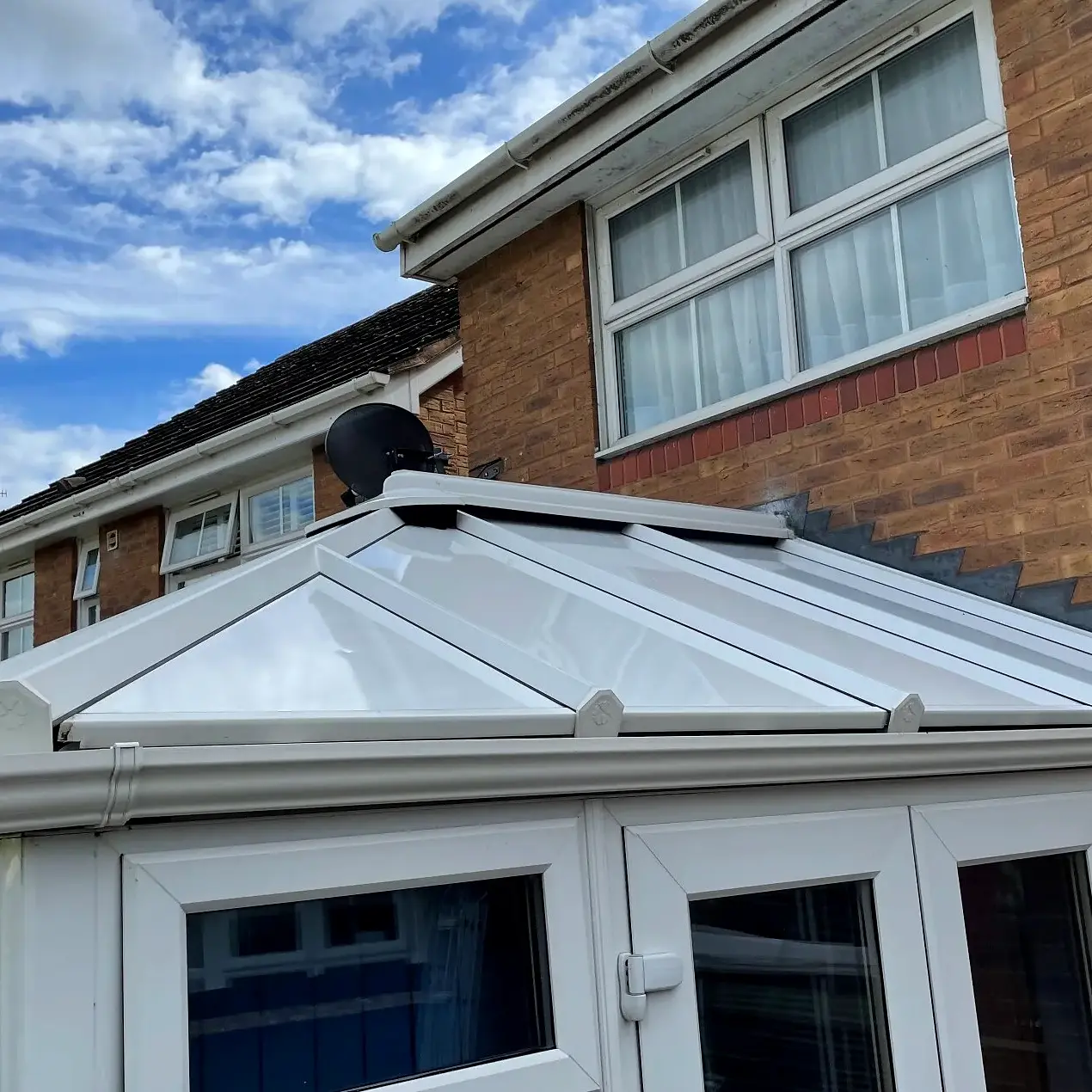
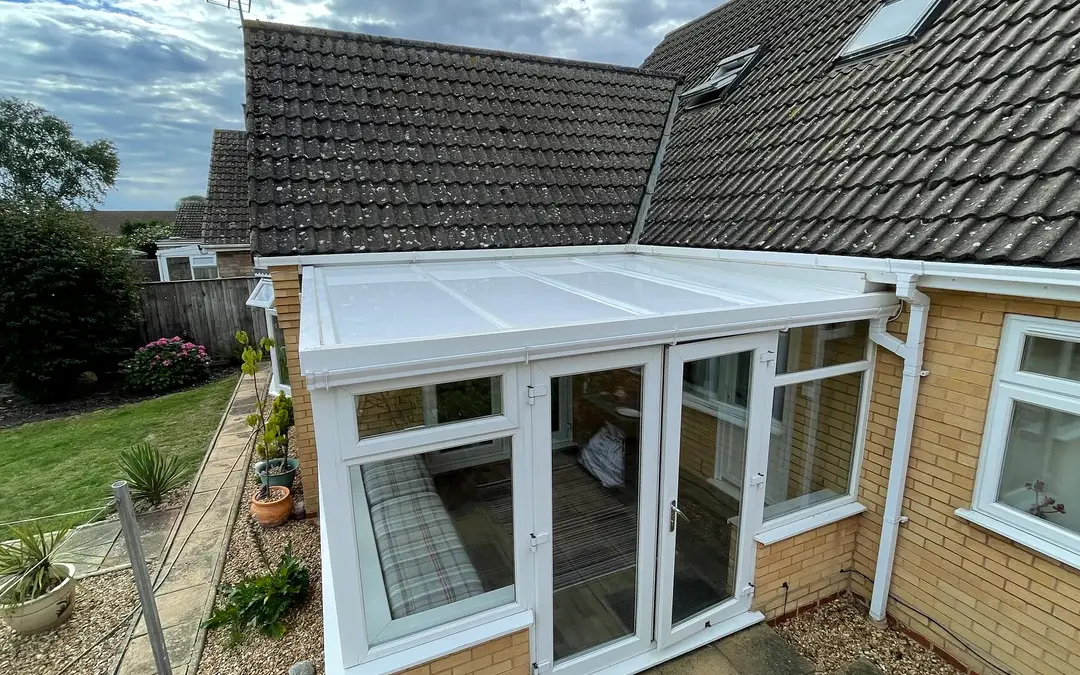
We come out, measure every face of the roof and look closely at the frame, because the new panels rest on the bars and beams already there. We check the gutters, the downpipes, the wall joint and, on a P-shape, the box gutter. We also look at access: where ladders stand, where panels are carried through and where the van can park.
You get a written fixed price for the roof, with any extras as separate lines. Nothing is paid before this point. More detail on what we look for is on the survey page, and the figures behind the price are on the cost page.
Stage two: booking the dry day
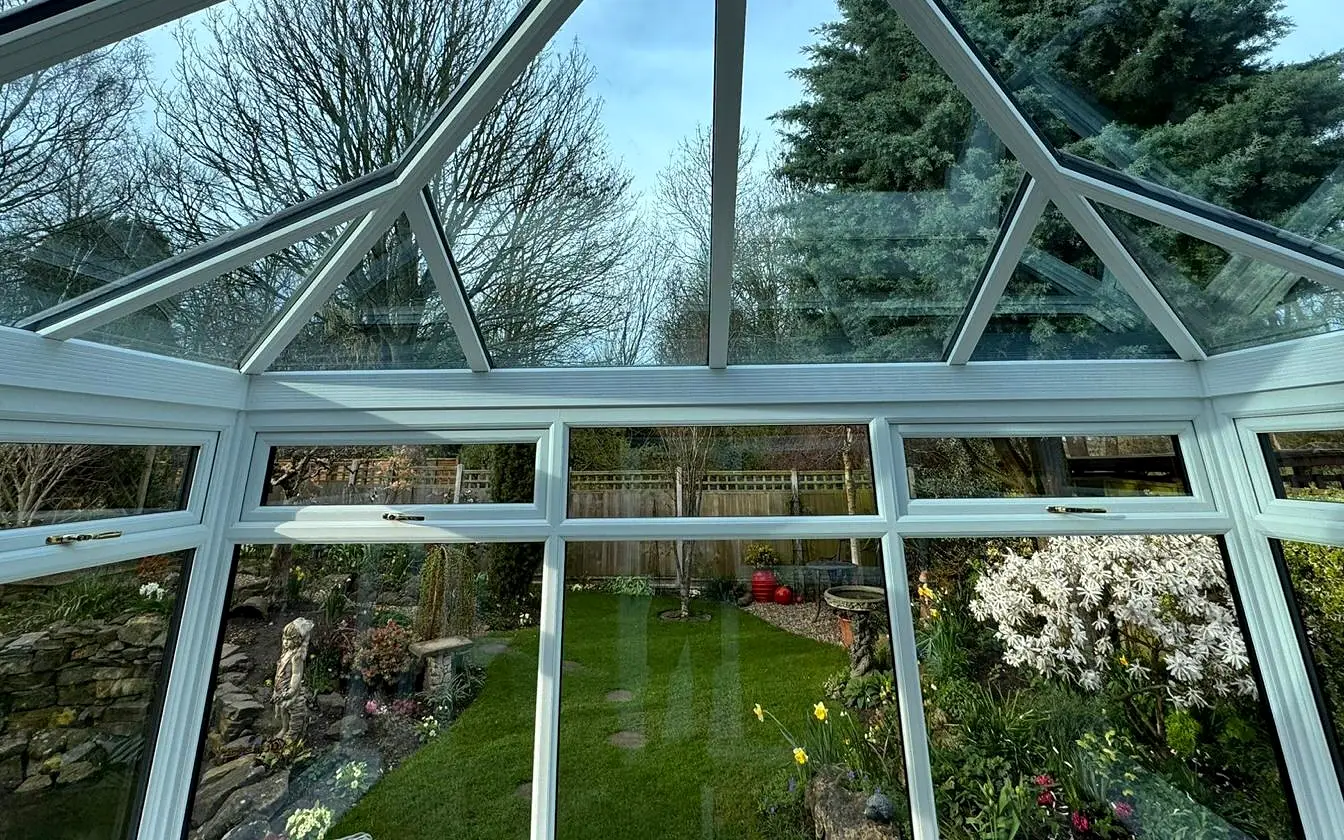
We pencil in a date with you, then watch the forecast as it gets close. A dry working day, for us, is one with under 0.2 mm of rain between 8am and 4pm, the same 0.2 mm the Met Office uses to call a day a rain day. If the forecast a day or two out says the roof cannot stay dry, we ring you and move it. There is no charge for that and the price does not change.
Some months give far more of these days than others. Across the 100 towns in our Rain Ledger, August averages about 25 dry working days and September about 19. The ledger shows your own town month by month, which is the best guide to when to book.
- 23Jan
- 19Feb
- 22Mar
- 22Apr
- 23May
- 23Jun
- 21Jul
- 25Aug
- 19Sep
- 22Oct
- 21Nov
- 22Dec
dry working days, the three highest picked out. Average of 100 towns, 2024 and 2025. Source: our rain ledger.
Stage three: the fitting day, hour by hour
Times below are a typical one day roof; yours may run earlier or later depending on size and shape. What does not change is the order: nothing is opened that cannot be closed again before we leave.
A one day roof
- Around 8amWe arrive, lay dust sheets, and you will have cleared the room. Panels are unloaded and laid out in fitting order.
- MorningThe first section of old roof comes off. Bars are checked and cleaned, the first panels go in and are sealed and capped.
- MiddaySection by section the old roof gives way to panels. On a Victorian, the hub is closed during the driest hours of the forecast.
- Early afternoonRidge cap, hip caps and wall flashing go on. Trims are fitted at the ends and the gutters are cleared.
- By about 4pmOld roof loaded and taken away, the room cleaned, and you get a tour of every cap and flashing, outside and in.
If a shower turns up anyway
Forecasts are good, not perfect. Because the roof is opened one section at a time, the gap over the room is never more than a few panels wide. If rain arrives, that section is sheeted over at once, the room stays covered, and we wait for the metal to dry before any seal is run.
A short shower costs an hour. A wet afternoon may push the last sections into a second day, with the open part sheeted overnight. Neither changes the price. The heavier the rain where you live, the more this matters, and our Noise Nights table ranks towns by how often it pours.
When it takes two days
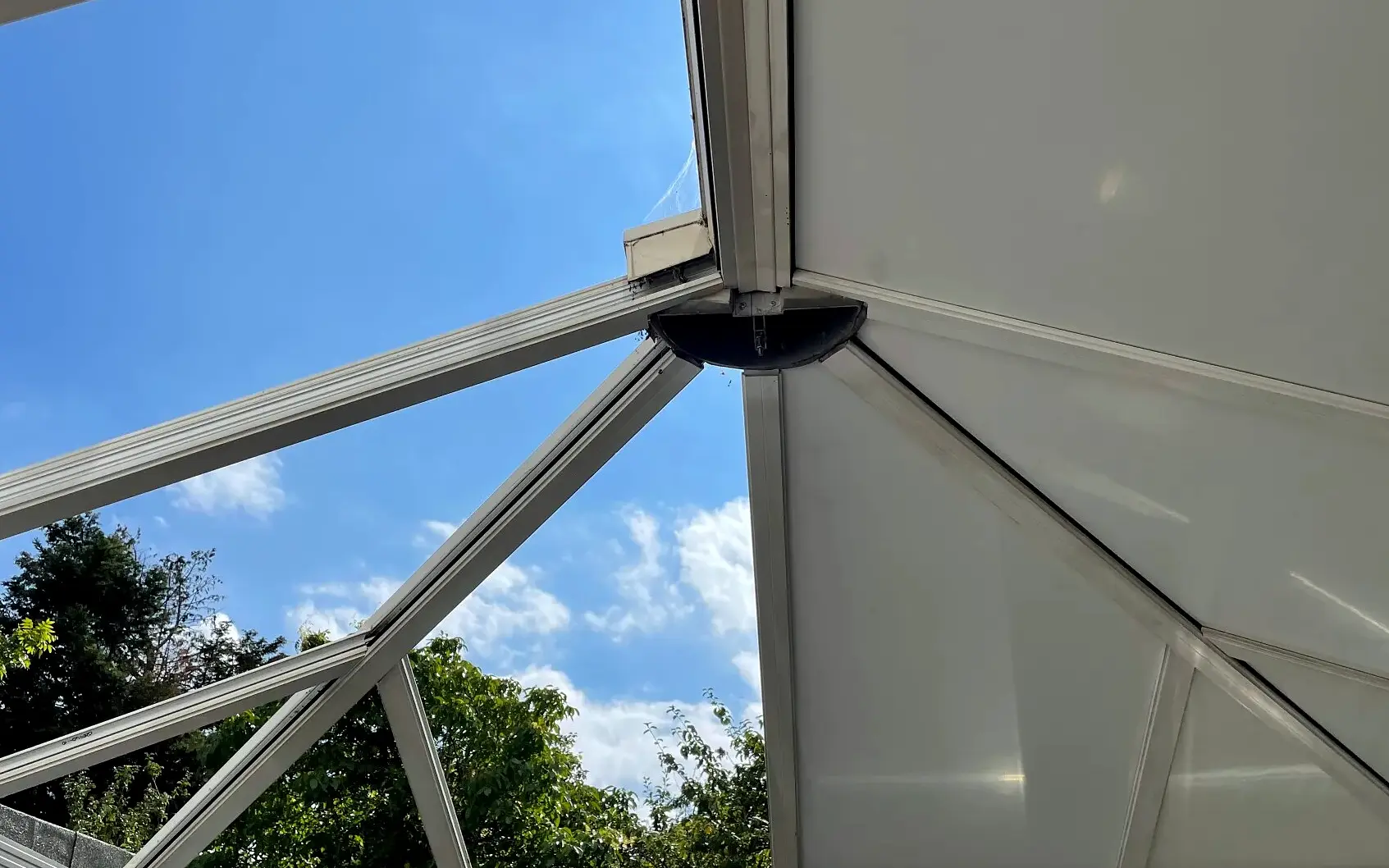
Large roofs over about 25 m², P-shapes with a box gutter, and frames that need repairs before the panels go on are the usual two day jobs. We say so at the survey and book two dry days together. At the end of day one every open part of the roof is panelled or sheeted over, so the room stays dry overnight and you can still use the house as normal.
The P-shaped roof page shows how a two day job is ordered.
Stage four: clearing up and aftercare
The old roof goes with us and is recycled where possible. Gutters are cleared of the debris that falls in during the strip, the floor is swept and the glass wiped where we have touched it. Before we leave, the roof gets one last look from the lawn, and from a bedroom window where there is one, and run water down it if the sky has stayed dry.
After that, care is light: keep gutters clear and give the panels a rinse now and then. A 10 year insurance backed guarantee covers the roof, and what to do if anything seems wrong is on guarantee and care. When you are ready to start, get a quote.