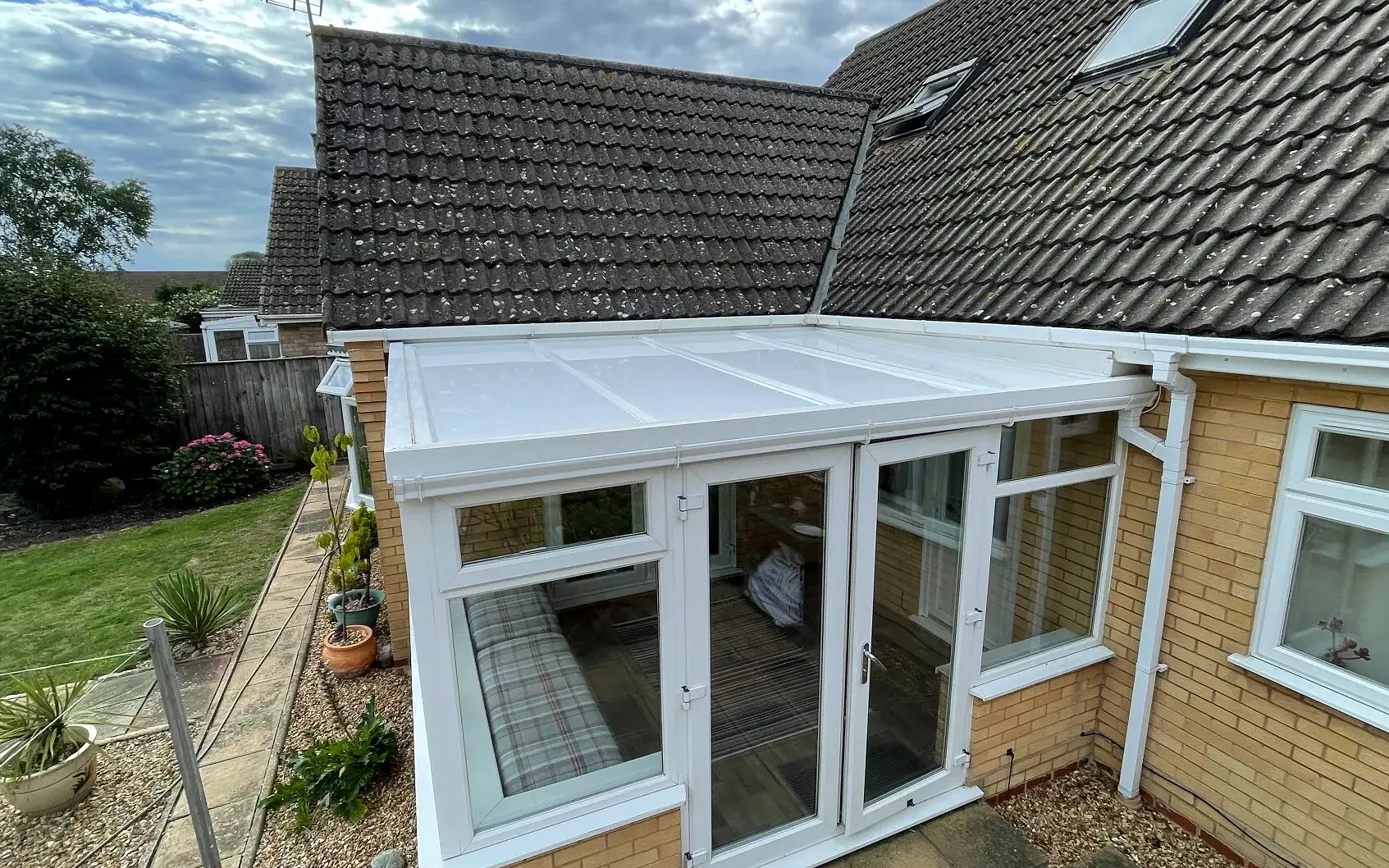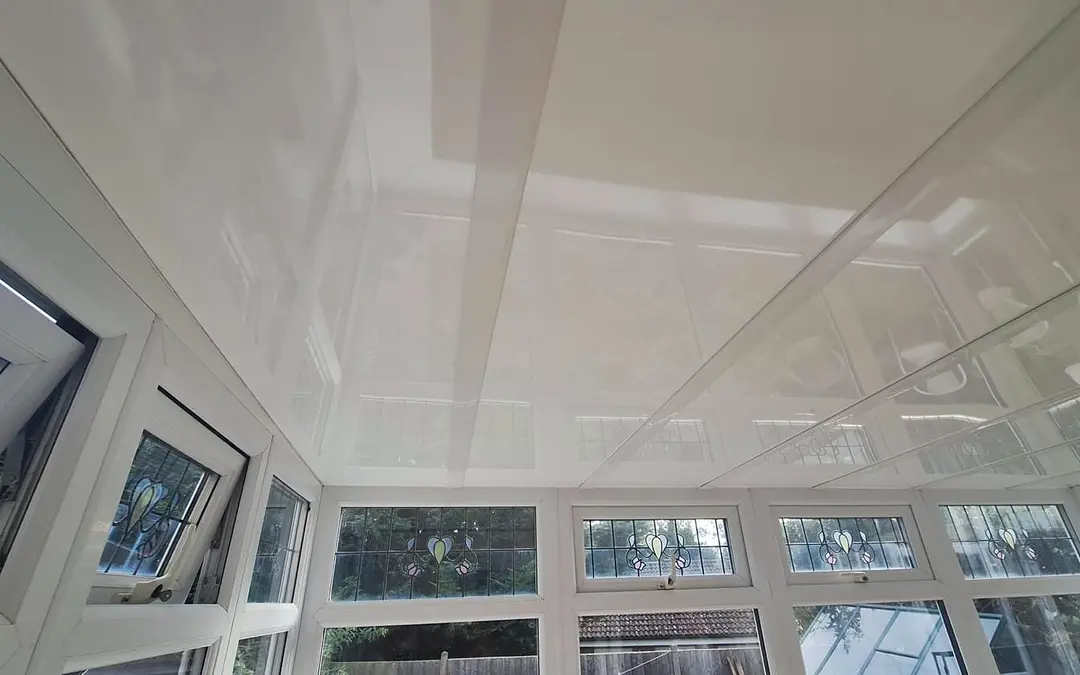
Guide prices by size and shape
Size sets most of the price, because it decides how many panels, caps and metres of seal go on. Shape sets the rest: angled cuts at hips and hubs take longer than square ones, and a box gutter between two roofs adds a junction that has to be built properly. The table shows the starting figure for each.
Not sure of your shape? The roof styles guide shows how to tell them apart from the garden.
| Small, up to 12 m² | Medium, 12 to 25 m² | Large, over 25 m² | |
|---|---|---|---|
| Lean-to | £3,000 | £4,000 | £5,000 |
| Edwardian | £3,150 | £4,200 | £5,250 |
| Victorian | £3,300 | £4,400 | £5,500 |
| Gable end | £3,350 | £4,500 | £5,600 |
| P-shape | £3,550 | £4,700 | £5,900 |
What the guide price pays for
The figure is the whole roof job, start to finish, on the frame you already have. It is not a materials price with labour to follow.
In the guide price
- Free survey and a written price
- Taking off the old roof and carrying it away, recycled where possible
- 75 mm insulated aluminium panels cut to your roof
- Seals, bar caps, ridge, hip and wall flashings
- A smooth white ceiling inside
- Clearing up on the day
- 10 year insurance backed guarantee on the roof
Priced at the survey if you want it
- A roof light (a glazed panel)
- LED spotlights in the ceiling
- New gutters or downpipes
- Repairs to the frame or glazing bars
- A new box gutter on a P-shape
Why extras are priced on the roof, not on this page
We do not print prices for extras because each one depends on things we can only see in person. A roof light depends on which bay it goes in and how the bars run. Spotlights depend on where the cable can come from. A gutter might need one new length or the whole run. Frame work might be a single packer or a rotten sill.
On a P-shape the box gutter is the big unknown: some only want clearing and resealing, others have split or sagged and need replacing. Until we have had the old covers off and looked down into it, any figure would be a guess.
So the survey lists each extra as its own line with its own figure, and you choose which to keep. Leave them all out and the roof price stands on its own. Read more on adding a roof light and lights in a panel ceiling.

How the survey turns a guide into a price
The guide gives you a ballpark before anyone visits. The survey replaces it with a number you can hold us to. Nothing is paid before it, and there is no charge for it.
From guide to written price
- MeasureEvery face of the roof is measured, so the area and the panel count are real, not estimated from photos.
- Check the frameBars, the eaves beam and every fixing get looked over, because the panels sit on what is already there.
- Look at the waterGutters, downpipes, box gutters and the wall joint are checked for sag, leaks and blockages.
- Note accessWhere we can stand, carry and park, and whether anything needs moving.
- Write it downYou get one fixed price for the roof, plus any extras listed separately for you to choose.
The weather never changes the written price
A panel roof is sealed on dry metal, so we book a dry day from the forecast and move it if the forecast turns. Moving the date costs you nothing. If a shower stops work halfway and the roof needs a second day, that costs you nothing either: the price was for the roof, not for the hours.
That is the point of the name. We would rather wait a week for the right day than fit in the wrong one, and the rain data in our Rain Ledger shows how many good days your town gets each month. The fitting process explains how the day itself runs.
When a cheaper fix is the better spend
A panel roof is not the right answer for every conservatory. If the room is fine in winter and only the sheets are dirty, cleaning costs far less. If one sheet has cracked, replacing that sheet may be enough. Our comparison pages lay out the options honestly: panels or new polycarbonate and a new roof or insulating the old one.
If you have weighed them up and want the real figure for yours, start a quote. It asks about your roof, then books the survey.