What stays and what goes
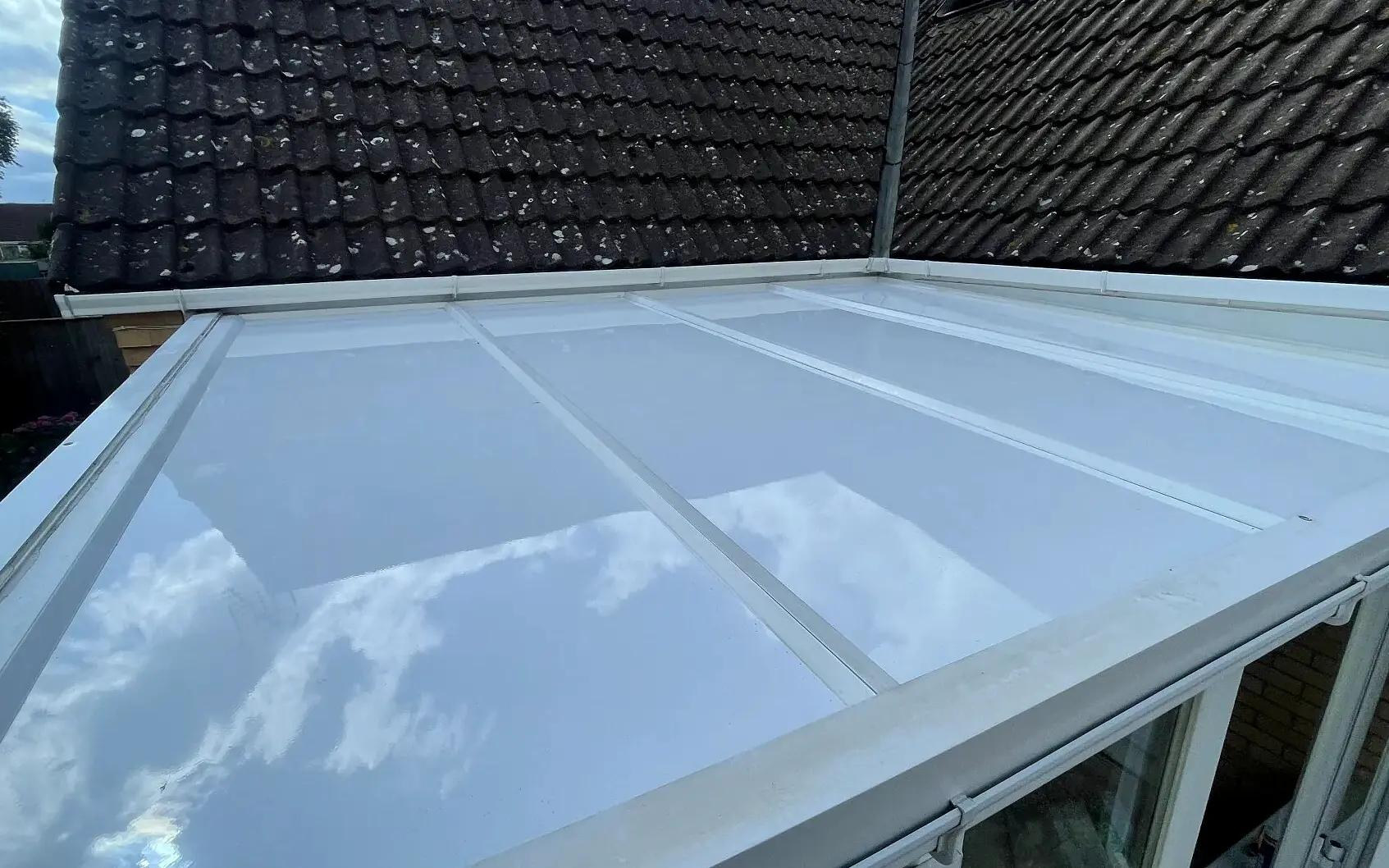
Everything you stand on, sit beside or walk through stays put. The work happens above the top of the window frames, from the ring beam up, and the old roof covering leaves with us at the end of the day to be recycled where it can be.
Stays as it is
- Dwarf wall and base
- Window frames and the glass walls
- French or patio doors
- Floor, sockets and radiators
- Glazing bars, once checked
Comes off
- Polycarbonate sheets or glass roof units
- Old bar caps, gaskets and end closures
- Worn flashing along the house wall
When the frame fails its checks
A roof swap only makes sense on a frame worth keeping. The surveyor looks for rot or splitting in timber, bars that have bowed, a ring beam that has dropped at one corner, and cracks in the dwarf wall that suggest the base is moving. Plenty of uPVC and aluminium frames pass. Some do not, and we say so before any price changes hands.
When the frame or base has gone, a new roof on top only hides the problem. Our page on whether to rebuild the whole conservatory instead covers that call honestly.
Can my frame carry a panel roof?
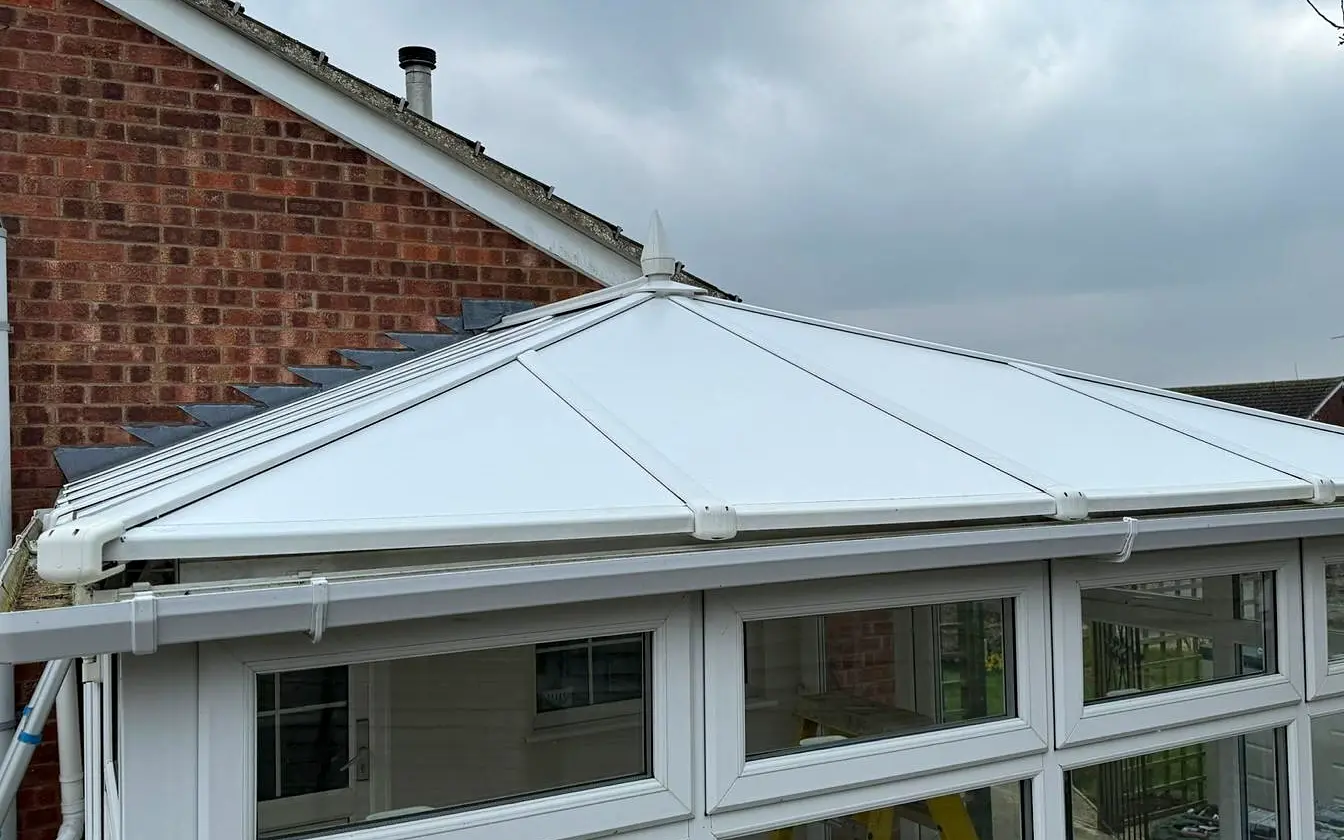
Panels are light for what they do: a foam core with thin aluminium either side, nothing like the load of a roof built up with timber and plaster. That is why a frame designed for glass or plastic can usually take them. The surveyor still checks the bars against your roof size and shape, and our page on the weight of an insulated roof panel explains what they look at.
What changes in the room
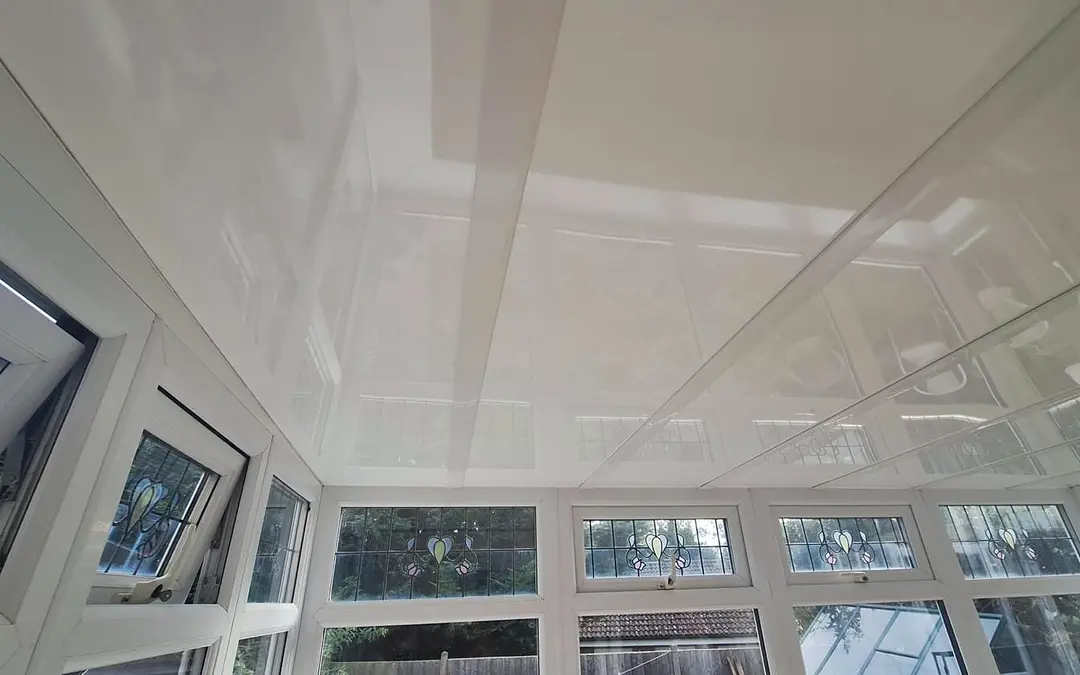
The view upward is the big change. Plastic flutes or glass give way to a smooth white ceiling, and daylight then comes in sideways through the glass walls rather than straight down. Rooms facing south lose the afternoon glare; rooms facing north get darker, which is where a roof light or two earns its place. Our page on how much light a solid roof costs you goes into it, and the new ceiling can take LED spotlights wired in on the same visit.

How the day runs
Because the roof is opened one section at a time, the room is never left wide open to the sky. The full order of work is on our fitting process page.
A roof-only swap, start to finish
- Room clearedYou move furniture away from the walls the night before; we sheet the floor.
- One section offWe lift the old covering from one part of the roof and check the bars underneath.
- Panels onNew panels go down on that section and are capped before the next one opens.
- Edges sealedFlashing, gutters and trims are sealed once every surface is dry.
- Clear upOld sheets go on our van; the inside gets a final wipe.
What a roof-only job costs
Leaving the walls alone keeps the price down. Guide prices, fitted and before extras such as roof lights, run from £3,000 below 12 m², from £4,000 between 12 and 25 m² and from £5,000 beyond, with a little added for more complex shapes. See the cost breakdown, or book a free survey for a fixed written figure.