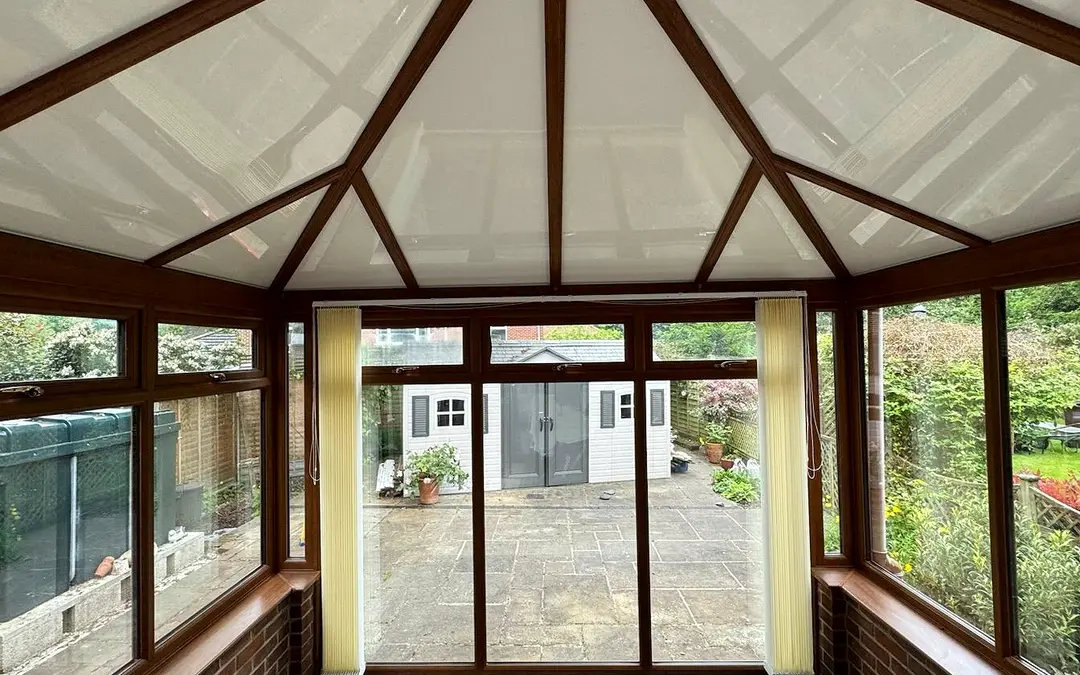
Where the light actually comes from
Sunlight through a clear roof lands mostly on the floor and on you, often as a hot patch that moves round with the day. Light through the walls comes in sideways and reaches further back into the house. That sideways light is what you read by and what makes the room feel open, and a panel roof does not touch it.
The ceiling then does a quiet job. A smooth white surface reflects most of the light that hits it, so the daylight bouncing off the floor and walls gets sent back down rather than escaping through the roof. The room loses brightness at the very top and keeps a more even light everywhere else.
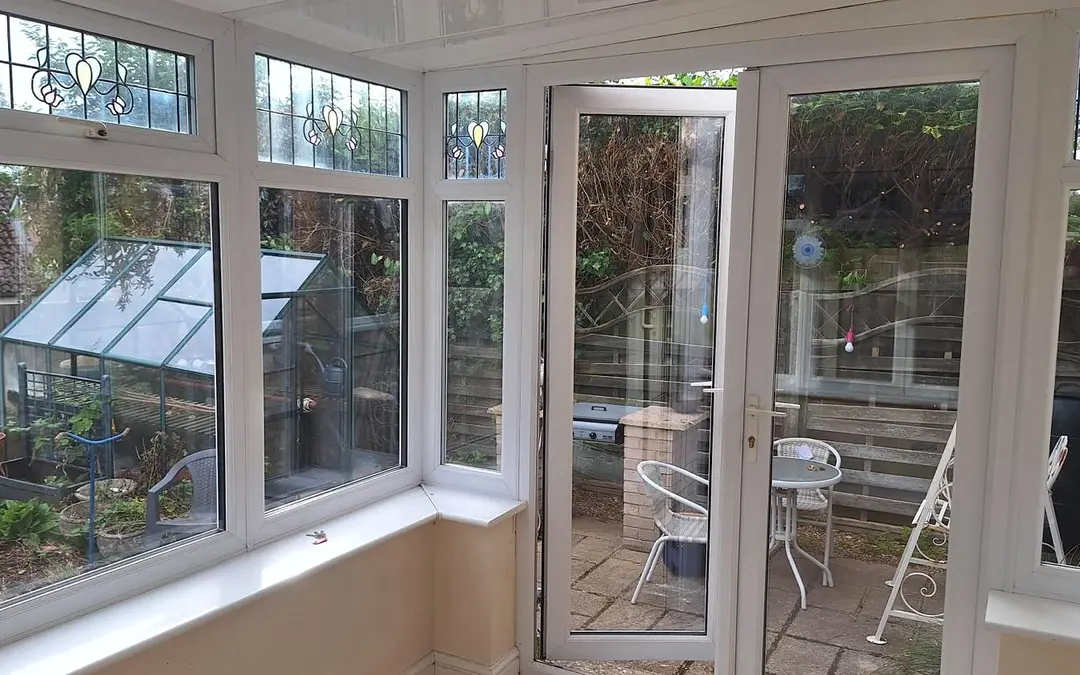

Glare, which nobody misses
The light you lose is also the light that made the television unwatchable at two in the afternoon and faded the sofa. Polycarbonate scatters the sun into a white haze, while clear glass drops it straight onto the floor in a bright slab. Under a panel roof the brightest spot in the room is the window, which is how every other room in the house works.
For people who work from the conservatory, this is often the change they notice first. The laptop screen is readable and the room can be used at noon in June.
Rooms that do get dim
We are straight with people about the rooms where a solid roof will feel gloomy. A narrow lean-to with tall fences or a neighbouring wall a metre or two away gets most of its light from above, because the walls look at brick. A conservatory under heavy tree cover is similar. And if the conservatory sits in front of a kitchen or lounge that has no other window, cutting the roof light also cuts light to that room.
In those cases we suggest one or two glazed roof lights let in among the panels, sited above the corner or seating area that wants them. They let the sky back in where it counts, at a small cost in heat. Our page on adding a roof light to a panel roof covers the trade-off.
Usually bright enough
- Open garden on two or more sides
- Tall frames on a low dwarf wall
- French or bifold doors in the front
- South or west facing
Ask about a roof light
- Lean-to boxed in by fences
- Heavy tree cover above
- A windowless room behind it
- Dark frames on a north wall
Small choices that keep it brighter
The ceiling colour matters most. A white ceiling inside is standard whatever colour the outside of the roof is, so an anthracite roof outside still gives you a light ceiling indoors; the choices are on our panel colours page. Pale floors and walls help the bounce, and a mirror on the house wall opposite the doors does more than you would expect.
For evenings and winter afternoons, LED spotlights in the panel ceiling replace the old trick of a lamp in the corner. They are planned at the survey so the cable runs can go in on the day.

Seeing it before you decide
The best test is a real room. Our job photos include lean-tos, Victorians and gable fronts photographed inside after the swap, on ordinary days. At the survey we stand in your room, look at what is around it and tell you plainly whether we think a roof light is worth it.
When you are ready, the quote journey books that visit.