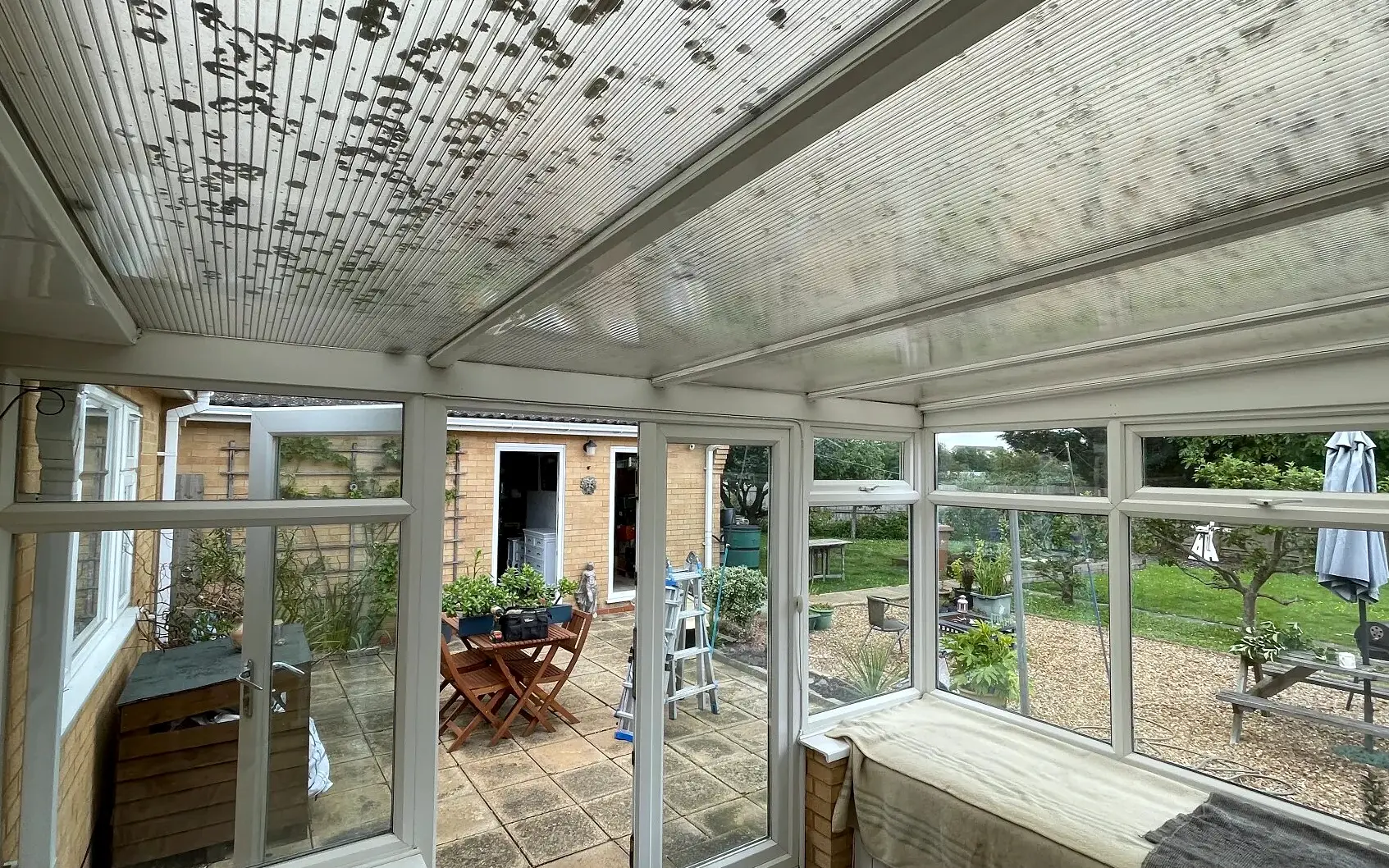
How we judged a dry working day
A roof comes off and goes back on in daylight working hours, so we looked only at 8am to 4pm. A day passes if less than 0.2 mm of rain fell in that window, the same line the Met Office uses for a rain day. Showers at night or in the evening do not count against it, because by then the roof is sealed.
We ran that test over every day of 2024 and 2025, 731 days in each of 100 towns, from hourly Met Office 2 km model data. Your own town, day by day, is on the Rain Ledger.
- 23Jan
- 19Feb
- 22Mar
- 22Apr
- 23May
- 23Jun
- 21Jul
- 25Aug
- 19Sep
- 22Oct
- 21Nov
- 22Dec
dry working days, the three highest picked out. Average of 100 towns, 2024 and 2025. Source: our rain ledger.
Summer is not the dry season people expect
The chart surprises most people. July gave about 21 dry working days, no better than January at 23 or December at 22. British summers bring heavy afternoon showers that bubble up after a warm morning, and a single one between 8am and 4pm spoils the day on our test.
High summer did best. August led the year, with June and the spring months close behind. Early autumn was the weakest stretch, and the single poorest month anywhere was Tiverton in February, at about 14 dry working days. Even that leaves about half the month usable, which is why fitting in the colder months is far from a long shot.
What each season is like for the job
Rain is one factor among several. Light, temperature and how you use the room all shift through the year, so here is the season by season picture as we see it from the scaffold board.
| Weather for fitting | Daylight | Worth knowing | |
|---|---|---|---|
| Spring | Best run of dry working days in our data | Lengthening fast | The roof is in before the room overheats |
| Summer | Afternoon showers cut into days | Longest days | Showers build quickly, so the morning forecast is checked |
| Autumn | Weakest dry day count, wetter nights | Shortening | Book now and the new ceiling is up for the cold |
| Winter | About as many dry days as July | Short, so the job is planned tight | Sealant wants dry, frost free surfaces |
The forecast matters more than the month
Because every month has dry days in it, we do not ask you to wait for a season. We book a date, watch the forecast as it comes closer, and move the job if a wet day turns up. Sealing the joints needs dry metal, and the frame is open to the sky while the old roof is off, so a dry window of a working day is what we need, nothing more.
Most roofs take one day. A bigger or more awkward shape may take two, and then we look for two dry days together. The average town had a longest run of 28 dry working days in a row over the two years, so finding a pair is rarely hard. Our fitting process page covers the day itself.
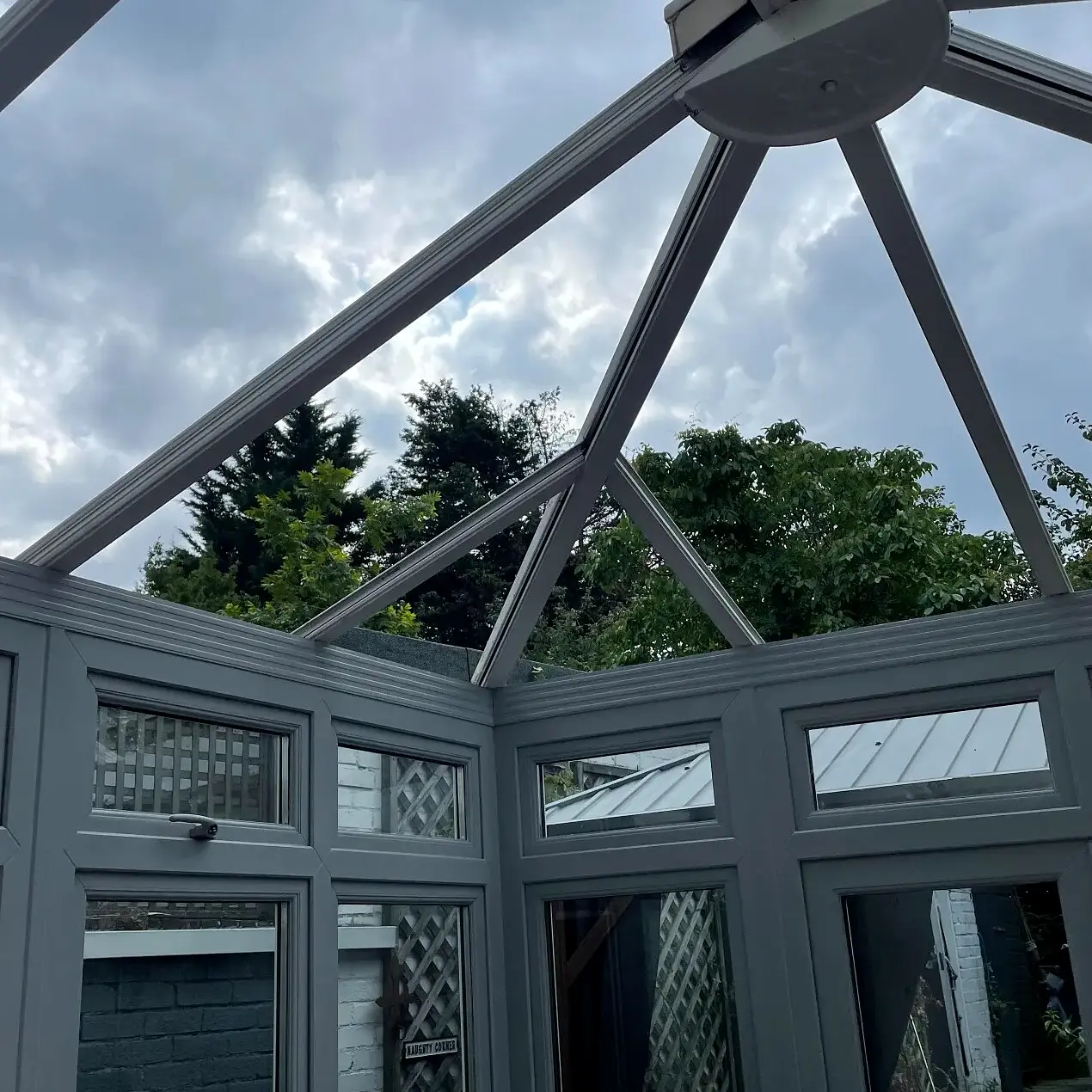
So when should you book
If the old roof makes the room an oven in summer and a fridge in winter, the honest answer is as soon as you are ready. Late summer and early autumn are a sensible time to arrange the survey, because a roof fitted by November gives you the warmer ceiling for the months that test it most.
If you are not in a hurry, late spring and high summer give the best odds in our ledger and the long evenings to enjoy the room straight after. Either way, see the guide prices on our cost page, then start a quote and we will suggest dates.