How often heavy rain comes
Heavy hours are rare compared with ordinary rain: the same average town logged 480 hours of moderate rain. But they bunch up, and they matter most because a gutter or a joint fails at its limit, not on a typical day. Downpour nights, with at least one hour over 4 mm between 11pm and 7am, ran at about 6 a year, which is why so many leaks are first spotted in the morning.
Some places get far more. Kendal topped our count at 81 heavy hours a year, and the single fiercest hour in two years was 42 mm in Hastings on 18 July 2025. Your town is on the Rain Ledger.
- 81 hours
- 67 hours
- 60 hours
- 58 hours
- 54 hours
- 49 hours
- 48 hours
- 46 hours
Where the water usually comes from
Start with the drip. Where it lands inside tells you a lot, though water can run along a bar for a metre before it falls, so look a little uphill of the wet patch too.
| Usual sign | Typical cause | |
|---|---|---|
| Wall flashing | Drips along the house wall side | Lifted or cracked flashing where the roof meets brickwork |
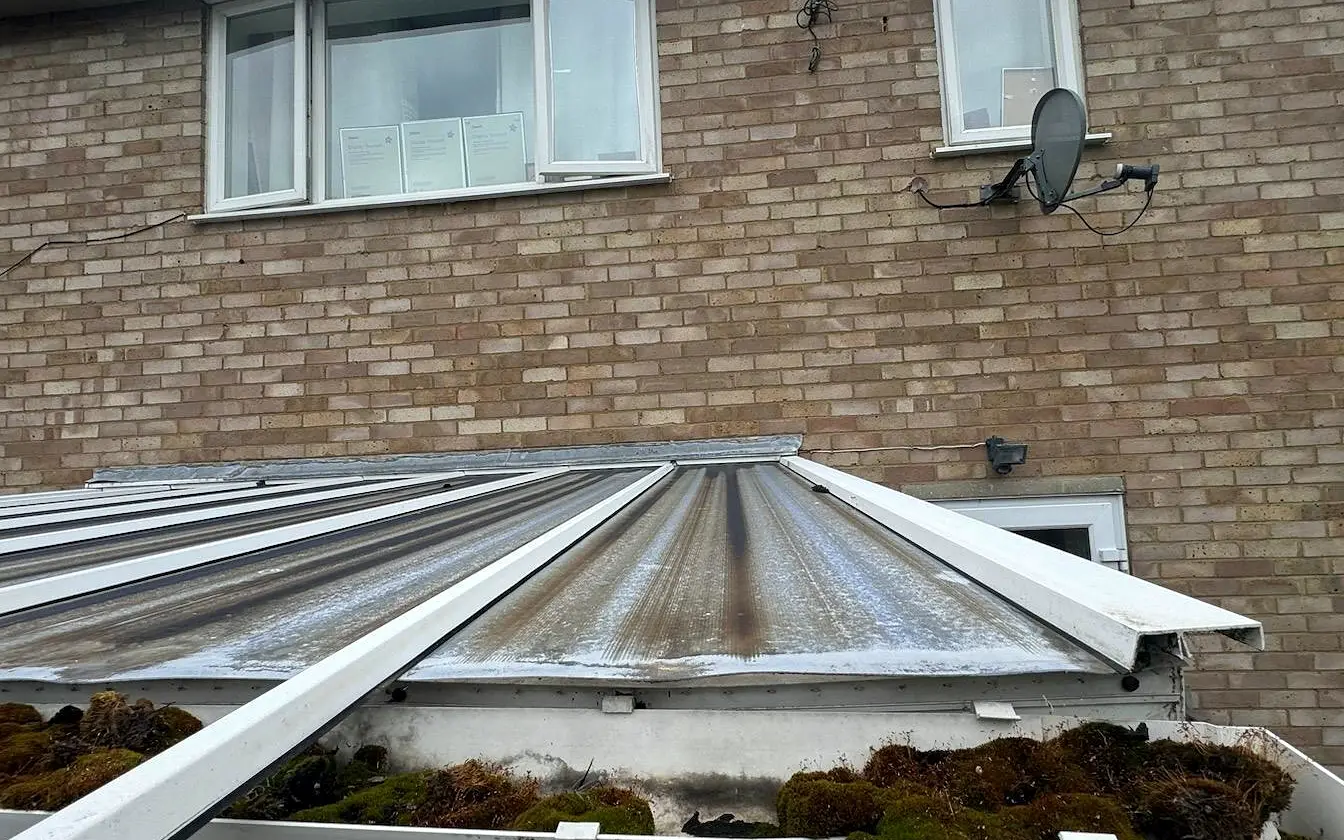
| Gutter | Water near the front edge, worst in downpours | Blocked outlet, leaves, sagging run, small downpipe |
| Glazing bar caps | A line of drips under one bar | Loose cap or perished gasket letting water under |
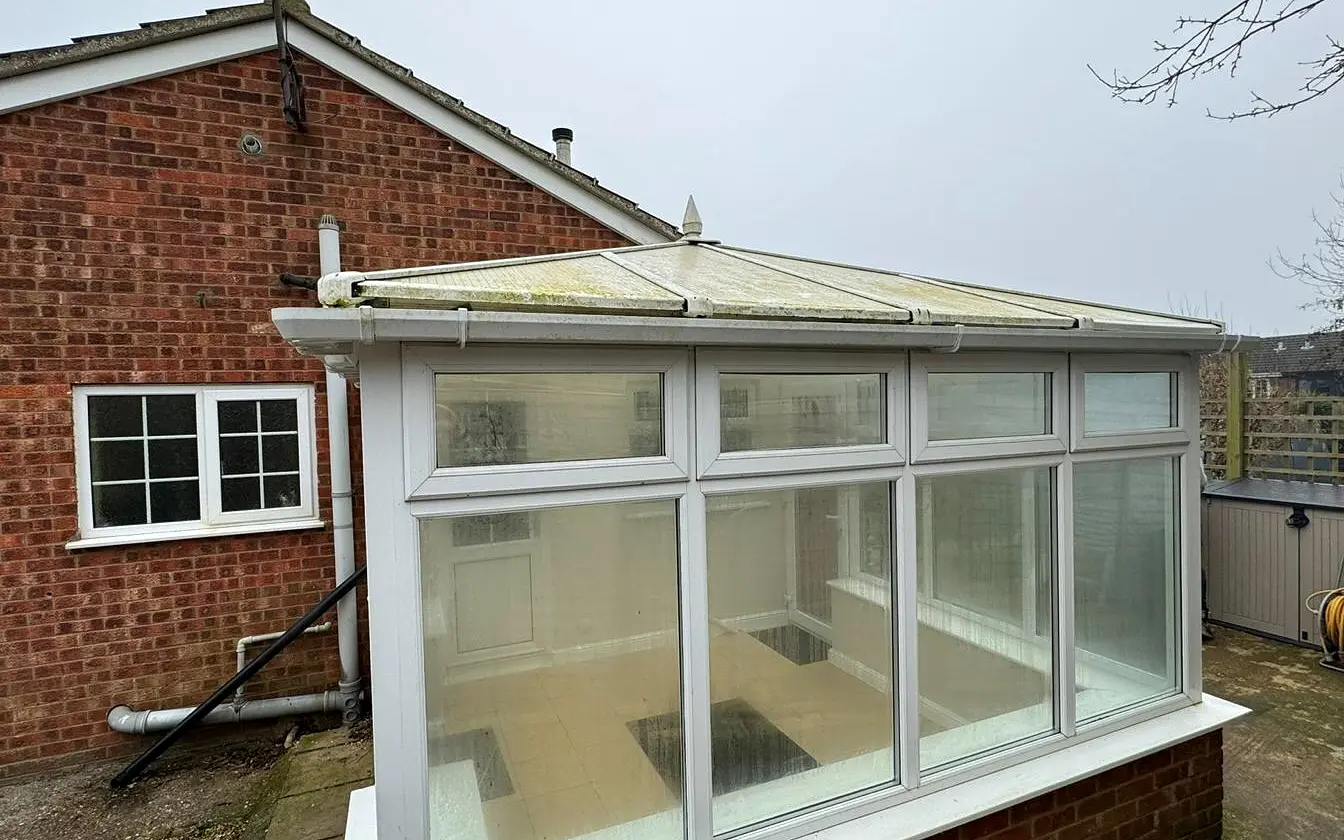
| Split sheet | A drip mid-roof, often with green inside the flutes | Old polycarbonate gone brittle and cracked |
| End seals | Water at the low end of the sheets | Failed tape or end caps letting the flutes fill |
| Ridge or hip | Drips at the top of the roof | Worn ridge seals or a shifted top cap |
Why it only leaks in a downpour
In light rain, water creeps down the roof slowly and every gutter and joint keeps pace. In a heavy hour the gutter fills faster than the outlet can empty it, the water backs up over the lip, and the edge of the roof sits in a shallow pond. Any weak seal along that edge is suddenly under water.
Wind adds a second push. Driven rain is forced sideways under caps and flashings that shed straight-falling rain perfectly well. That is why some leaks seem to come and go: they depend on the direction the storm arrives from as much as on how hard it falls.
What to check yourself
- Watch the gutter during heavy rain, from indoors or under an umbrella. If it overflows, clear the outlet and the run before anything else.
- Look at the flashing along the house wall from a window above, if you can. Gaps or lifted edges are easy to see.
- Run a hose on one section at a time, with someone inside, to pin down which part lets water through.
- Press the glazing bar caps. Any that move need re-seating.
- Check the brickwork above the roof. Water coming through the house wall can look exactly like a roof leak.
Stay off the roof itself. Polycarbonate and glazing bars are not built to be walked on.
When it is time to stop patching
One cracked flashing or a choked gutter is a repair, and you should treat it as one. A new roof makes sense when the leaks keep moving: brittle sheets cracking in more than one place, seals failing along every bar, flutes green with water that got in years ago. At that point each fix buys a season and the next storm finds the next weak spot.
Our roofs replace the sheets and bar caps with 75 mm insulated panels sealed on dry days, new trims, and a guarantee that runs ten years and is insurance backed, set out on our guarantee page. If you are not sure which side of the line you are on, the signs a roof is past saving page helps, and a free survey settles it.