Three ways to line an old roof
Reflective foil quilts are clipped or pinned to the glazing bars. Rigid foam boards are cut to sit between or under the bars and given a finished face. Ceiling kits fix battens to the frame and hang a lined ceiling, sometimes plasterboard, below the old roof. Each one adds a layer under the existing sheets instead of replacing them.
Results depend on three things: thickness, how tightly every edge is sealed, and whether the room gets aired. A thin foil quilt does a great deal less than a thick, well taped board.
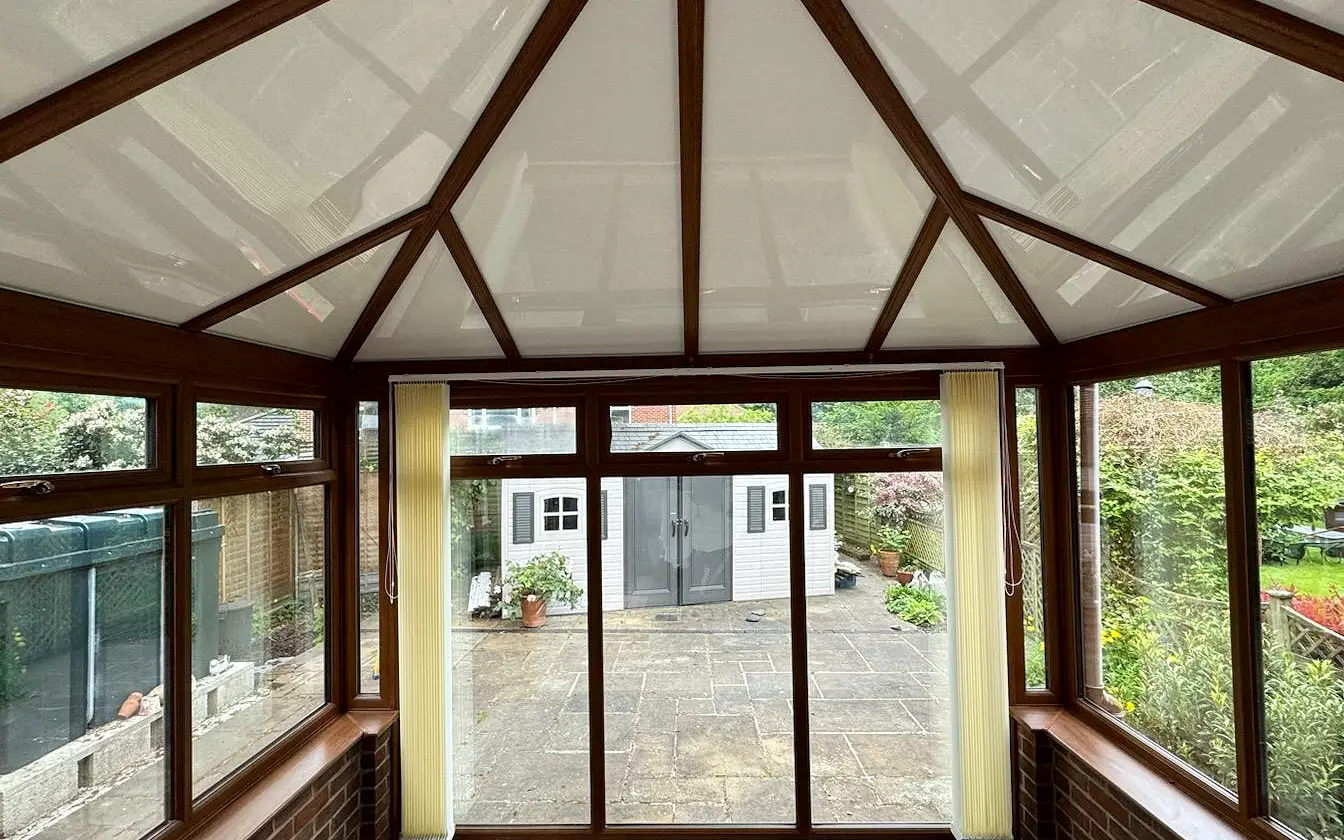
Light is part of the deal as well. A lined roof is a solid ceiling in all but name, so the room loses its overhead daylight just as it would under panels, only with the old sheets still sitting on top and a finish that depends on how neatly the boards were cut. If you are giving up the sky either way, it is worth pricing both before you choose.
A lining against a new panel roof
Lay the two side by side and the trade is clear: the lining is cheaper today, the new roof clears away the reasons the room disappoints. The price bands on our cost page show what the second option starts at for your size of room.
| Lining under the old roof | New 75 mm panel roof | |
|---|---|---|
| Spend now | Lower, sometimes much lower | From £3,000 fitted, small roof |
| Winter warmth | Better than bare sheets; depends on thickness and sealing | About 0.43 W/m²K |
| Leaks and failed seals | Still there, now out of sight | Gone with the old roof |
| Yellowing, moss, grime | Still on the outside | Old sheets taken away and recycled where possible |
| Rain sound | A little softer; the hollow sheet still takes the hits | No hollow sheet; no published test for panels |
| Condensation | Risk of hidden damp between lining and sheets | Foam bonded to both skins, no cavity below the roof |
| Guarantee | Varies by product and fitter | 10 year insurance backed guarantee on the roof |
The condensation catch
With a lining in, the old roof is still the outer skin, and it is still cold. Any gap at a bar, a corner or a light fitting lets moist room air slip through to meet it, where it turns to water. Because the wet is now hidden, the first sign is often a spreading stain or a musty smell. A vapour tight layer on the warm side and steady airing both reduce the risk, but they ask for careful fitting.
The page on condensation on a conservatory roof explains dew points and why the coldest surface always gets wet first.
What a lining cannot reach
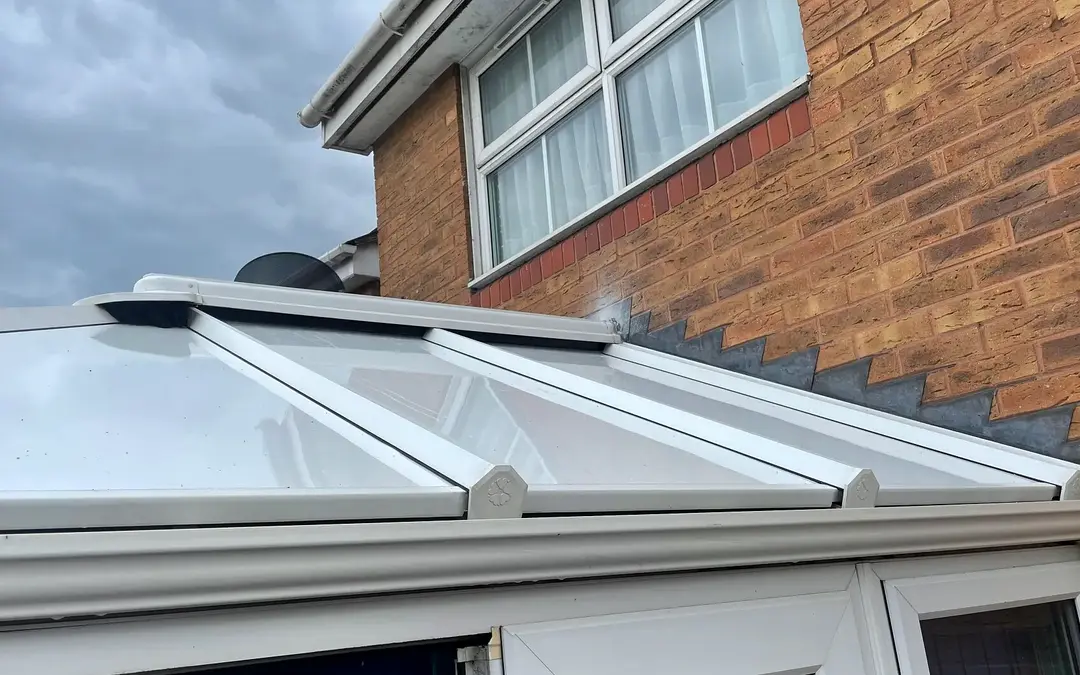
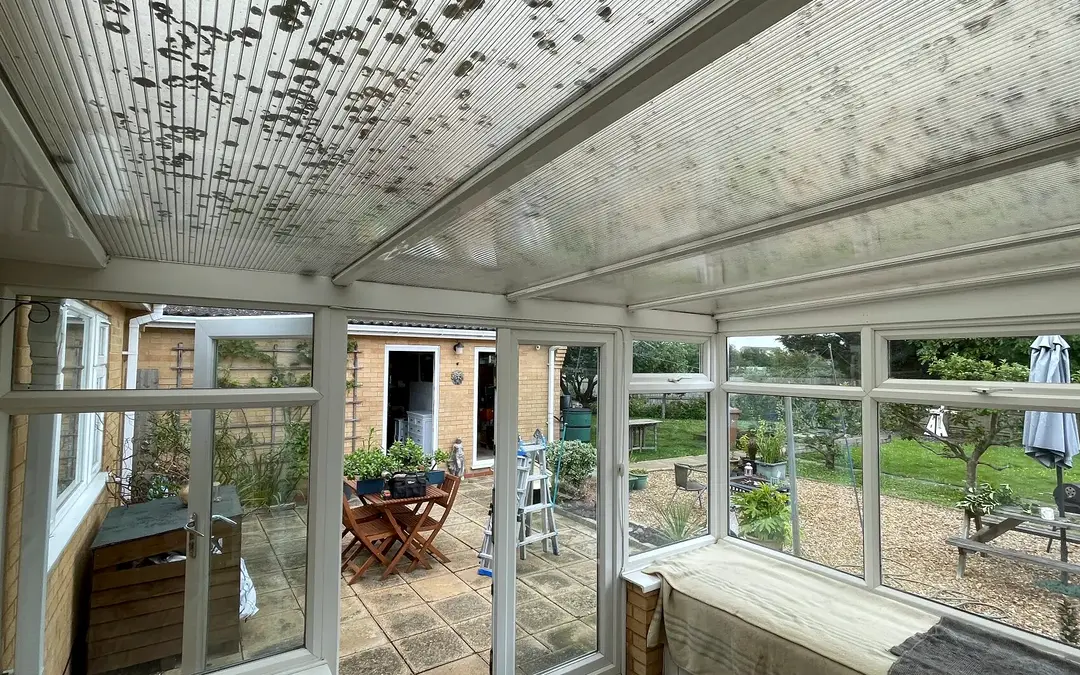
A lining works on the inside of the problem. If water already gets in through a split sheet, a perished end cap or a lifted flashing, it will carry on getting in, only now behind a ceiling. Polycarbonate that has turned brittle and tea coloured keeps ageing, and moss and leaves still sit in the flutes and the gutter.
Rain is the other limit. The hollow sheet still takes every drop, and a lining can only soak up part of what comes through. BRE measured 25 mm polycarbonate at 64.6 dB in lab heavy rain, and that same sheet stays above your head. Before spending on a lining, run through the signs that a roof is due for replacing.
When a lining is the right money
If less will do, spend less. A lining makes sense when the roof is dry, the sheets are fairly young and still clear, rain sound does not trouble anyone, and what you are after is a warmer room for a few winters at the lowest outlay. It also suits a conservatory you expect to knock down or rebuild before long.
It is the wrong money once water is coming in, the plastic has yellowed or cracked, or night rain keeps somebody awake. Then you pay for the lining now and the roof later, and the lining goes in the skip with the old sheets.
A useful test is to stand in the room during a heavy shower with the lights off. If you hear drips, see stains spreading at the bars or smell damp afterwards, the roof itself is the problem and a lining will only muffle the warning signs.
What replacing it involves instead
Replacing means we strip off every old sheet and set a 75 mm insulated roof onto the frame you already have, with a smooth white ceiling underneath. Most go on in one dry day. The fitting process walks through that day hour by hour, and our quote form gets someone out to look at the roof and set a fixed written price.
If the survey finds your roof is sound and a lining would serve you well, we will say so.