
Yellow, cloudy or grey sheets
Polycarbonate yellows because sunlight slowly breaks down the plastic at its surface. Once the colour has changed it stays changed, and the sheet is more brittle than it was. A grey or green film inside the flutes is a different fault: damp has got into the hollow channels and something has started growing where no cloth can reach.
Both mean the sheets are past their best. Cleaning the outside will not bring back clear plastic, and resealing the ends will not dry out the inside of a flute.
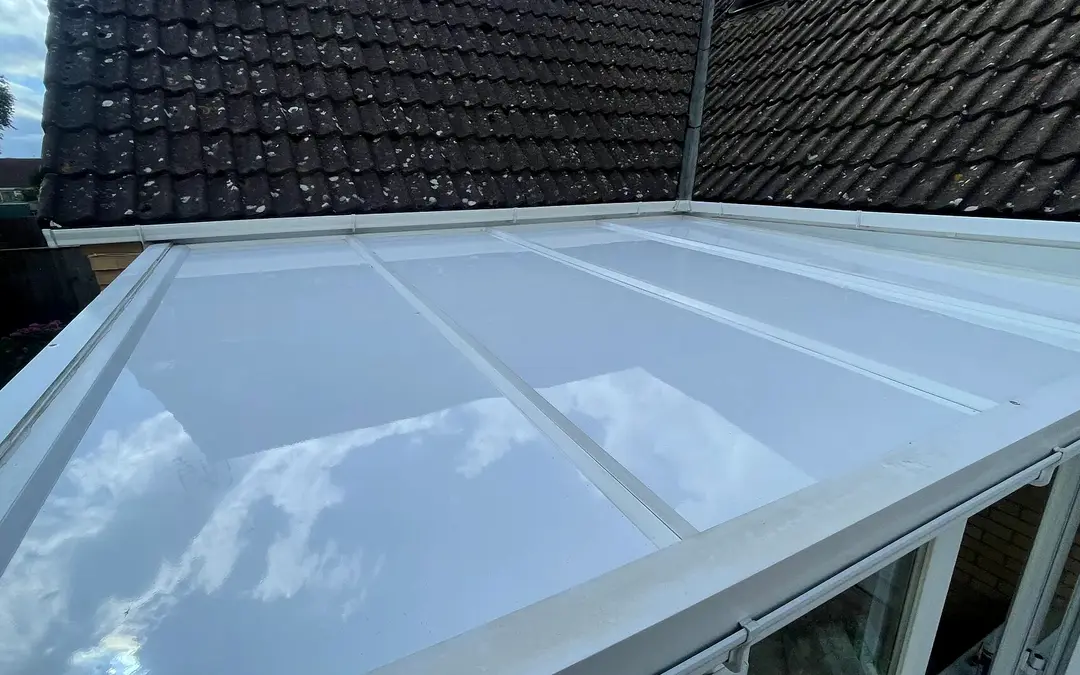

Splits, cracks and sheets that have crept
A crack across a sheet, or a sheet that has crept downhill until daylight shows at the top, lets rain straight in. Plastic grows and shrinks a little with every warm afternoon and cold night, and after enough years the fixings stop holding it in place. One cracked sheet can be swapped; several, on an old roof, usually mean the rest are close behind.
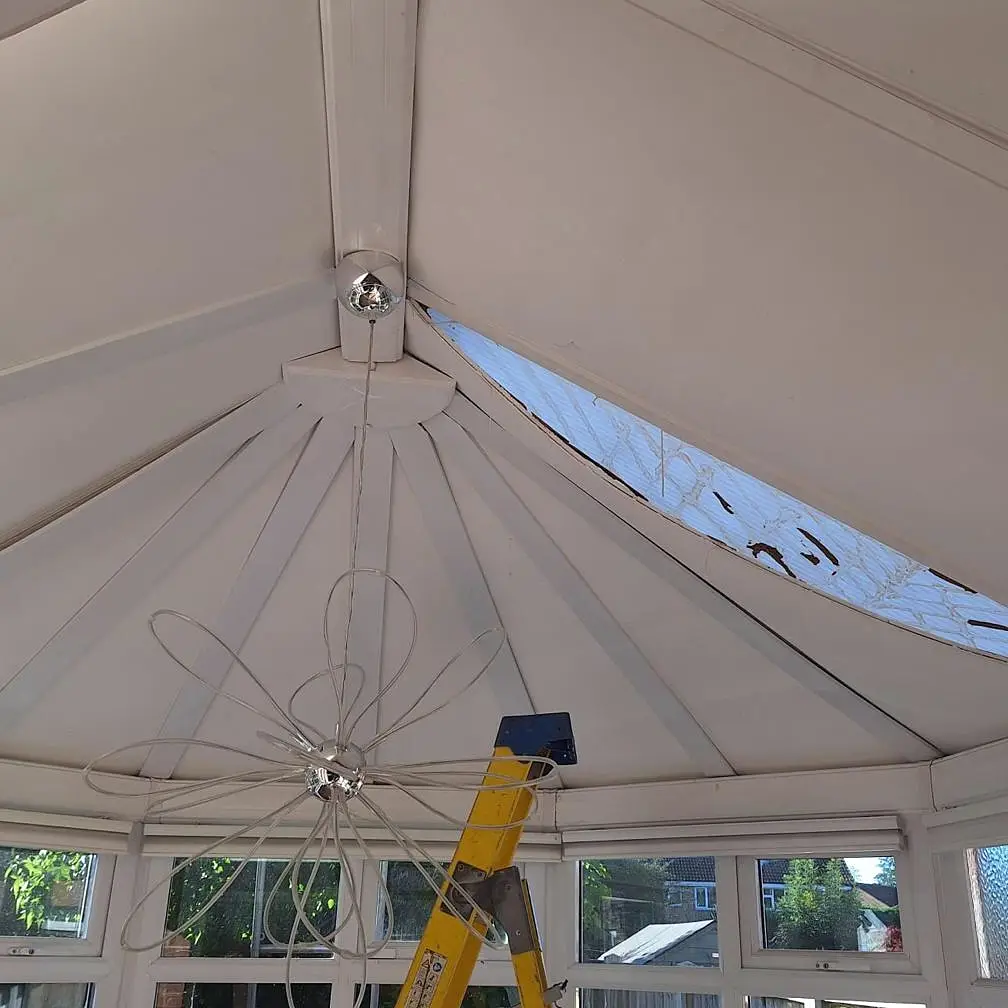
Drips after heavy rain
A roof that only leaks in a proper downpour is telling you something about its seals and gutters. Heavy rain, above 4 mm an hour on the Met Office scale, fills a gutter faster than it drains and pushes water into any joint that has opened up. The average town in our rain ledger saw about 26 hours of it a year in 2024 and 2025; Kendal saw 81.
Before deciding the roof is finished, rule out condensation, which drips on cold dry mornings too. Our page on a conservatory roof leaking in heavy rain walks through finding the source.
- 81 hours
- 67 hours
- 60 hours
- 58 hours
- 54 hours
- 49 hours
Drumming at night and an oven by day
If rain wakes you, the roof is part of the reason. In lab heavy rain the BRE measured 25 mm polycarbonate at 64.6 dB and double glazed roof glass at 52.0 dB, and the plastic gave out most of its sound in the sharp upper range. Our rain data found 65 nights a year in an average town with at least an hour of moderate rain between 11pm and 7am; the Noise Nights league table ranks every town we pulled.
Heat is the other half. A clear or pale roof lets the sun in all afternoon with nowhere for the warmth to go, then loses it all again after dark. A room you only use in April and October is a sign in itself.
Moss, leaves and tired seals: often a repair
Not every ugly roof is a failed one. Moss along the bar caps, leaves packed in the gutter and a grubby film on top can be cleared in an afternoon. A single gasket that has shrunk back can be replaced. If the sheets are still clear and whole, those jobs may buy you several more years, and when that is the honest answer we will give it to you instead of a quote.
Time for a new roof
- Sheets yellow, brittle or cracked in more than one place
- Film or growth inside the flutes
- Drips at several joints after heavy rain
- Too hot and too cold to use for half the year
Fix it and wait
- Moss on the caps with clear sheets underneath
- A blocked gutter overflowing in showers
- One cracked sheet on an otherwise sound roof
- A single gasket lifting at one end
What to do next
If two or three of the replace signs fit, a survey will tell you whether your frame can take a panel roof and what it would cost. A small lean-to starts from £3,000 fitted, and sizes, shapes and extras are priced out on our conservatory roof cost page. When you are ready, ask for a survey and fixed price.
