What each roof does best
Glass has moved on a long way from the leaky roofs of the 1990s. Low emissivity coatings reflect warmth back down into the room, argon fills the space between panes, and a laminated inner sheet deadens sound. If your conservatory has an old glass roof that drips or mists between the panes, a new glass roof is a genuine option and we will not pretend otherwise. We fit panel roofs only, so treat this as a fair account from one side of the fence.
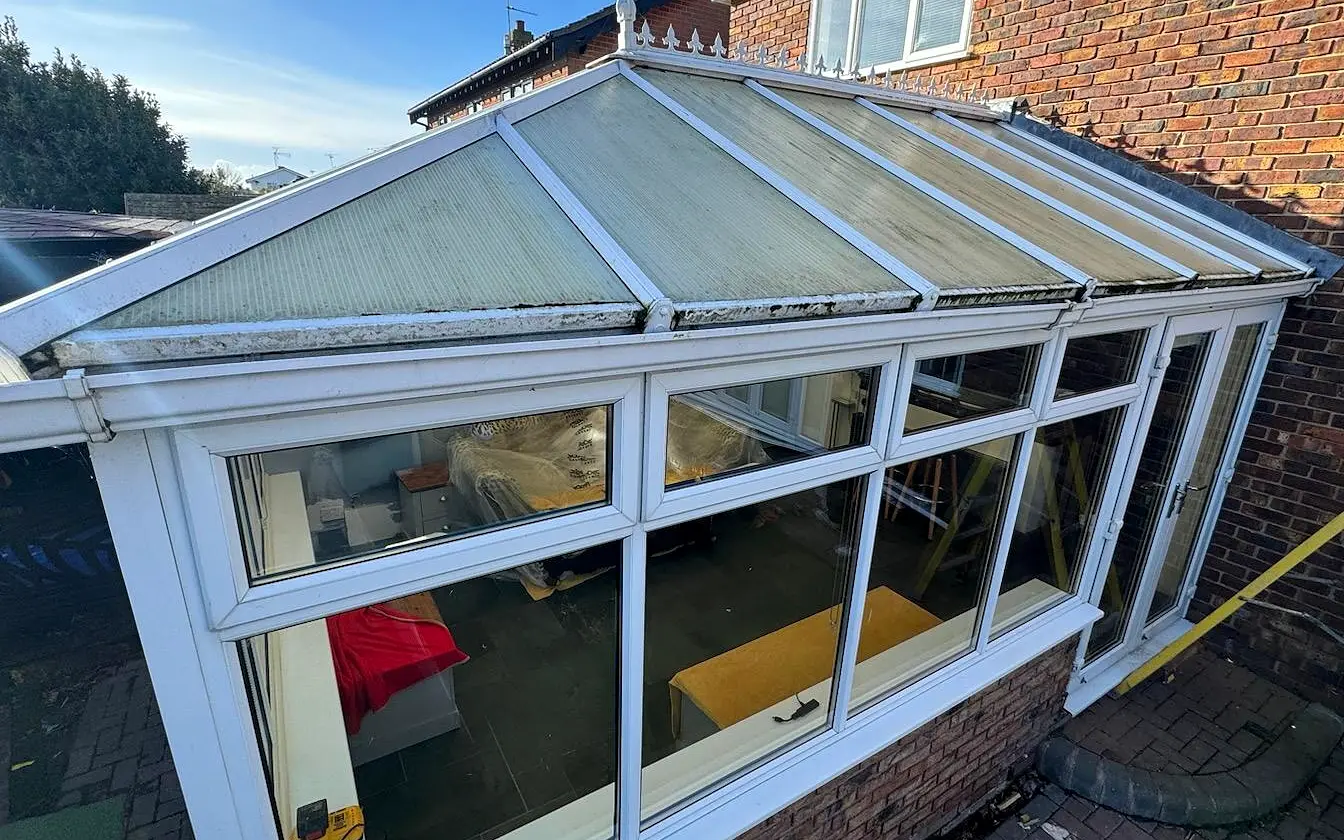
Modern low-e glass roof
- Keeps the view of the sky and full daylight
- About 1.2 to 1.6 W/m²K, far better than old roof glass
- Measured at 52.0 dB in BRE lab heavy rain
- Lets overhead summer sun in, even with solar control coatings
- Heavy sealed units, usually the dearer roof
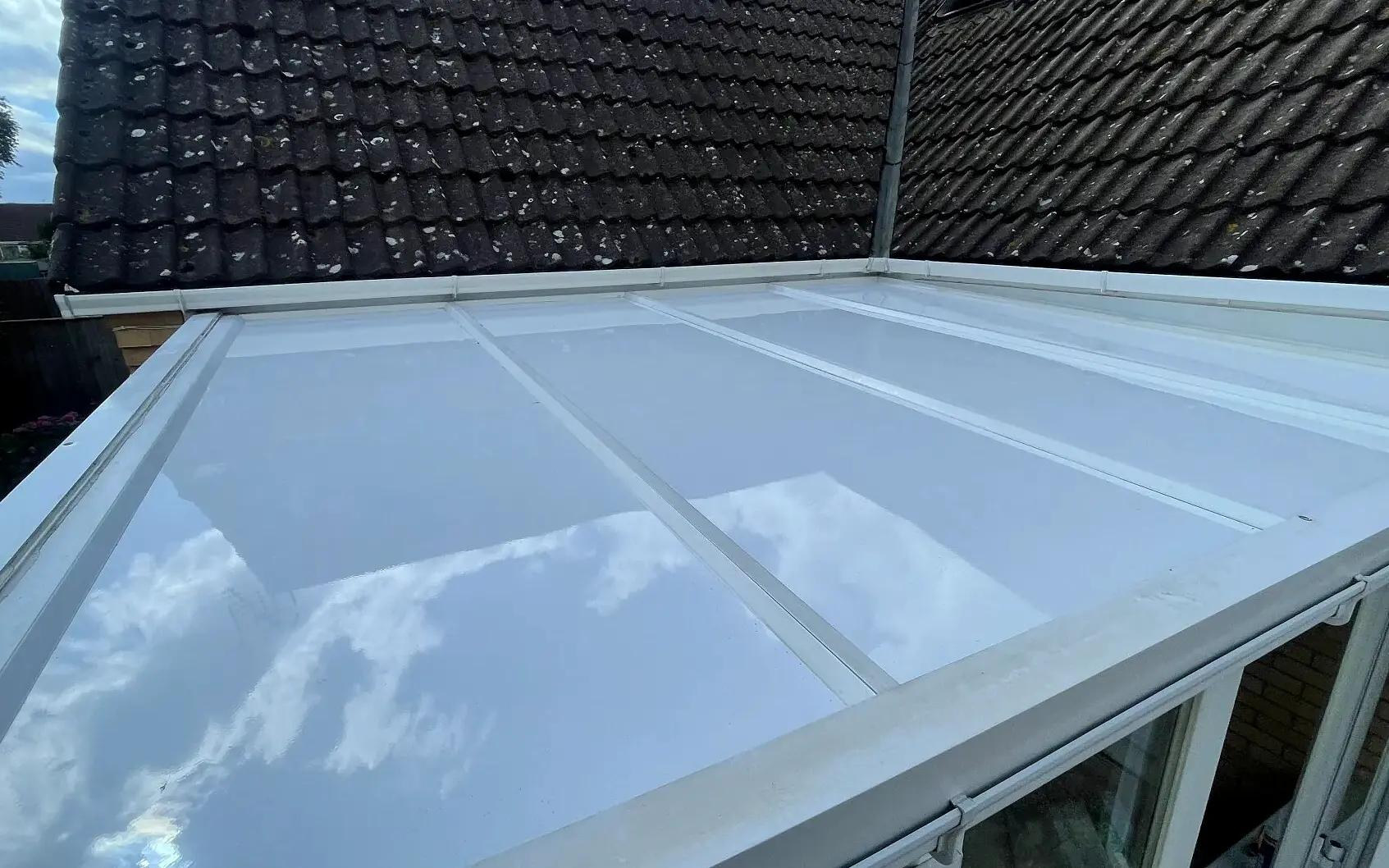
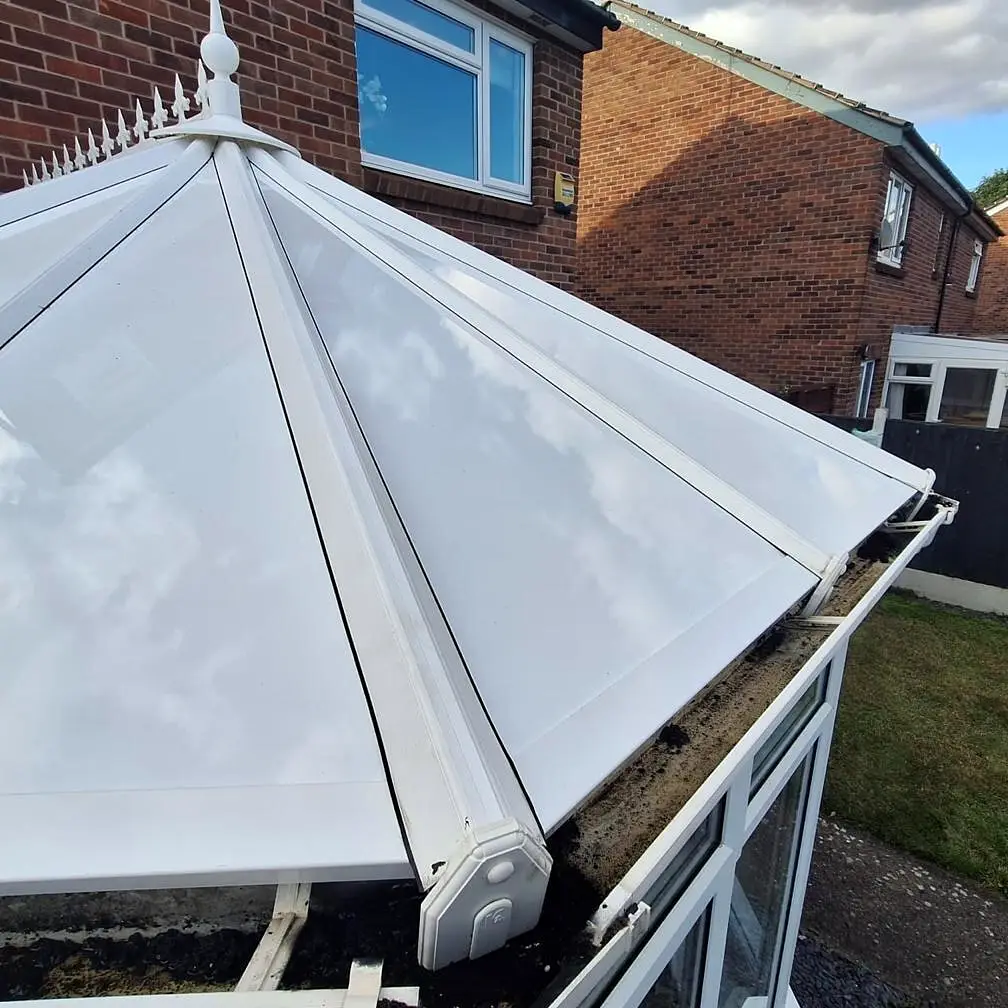
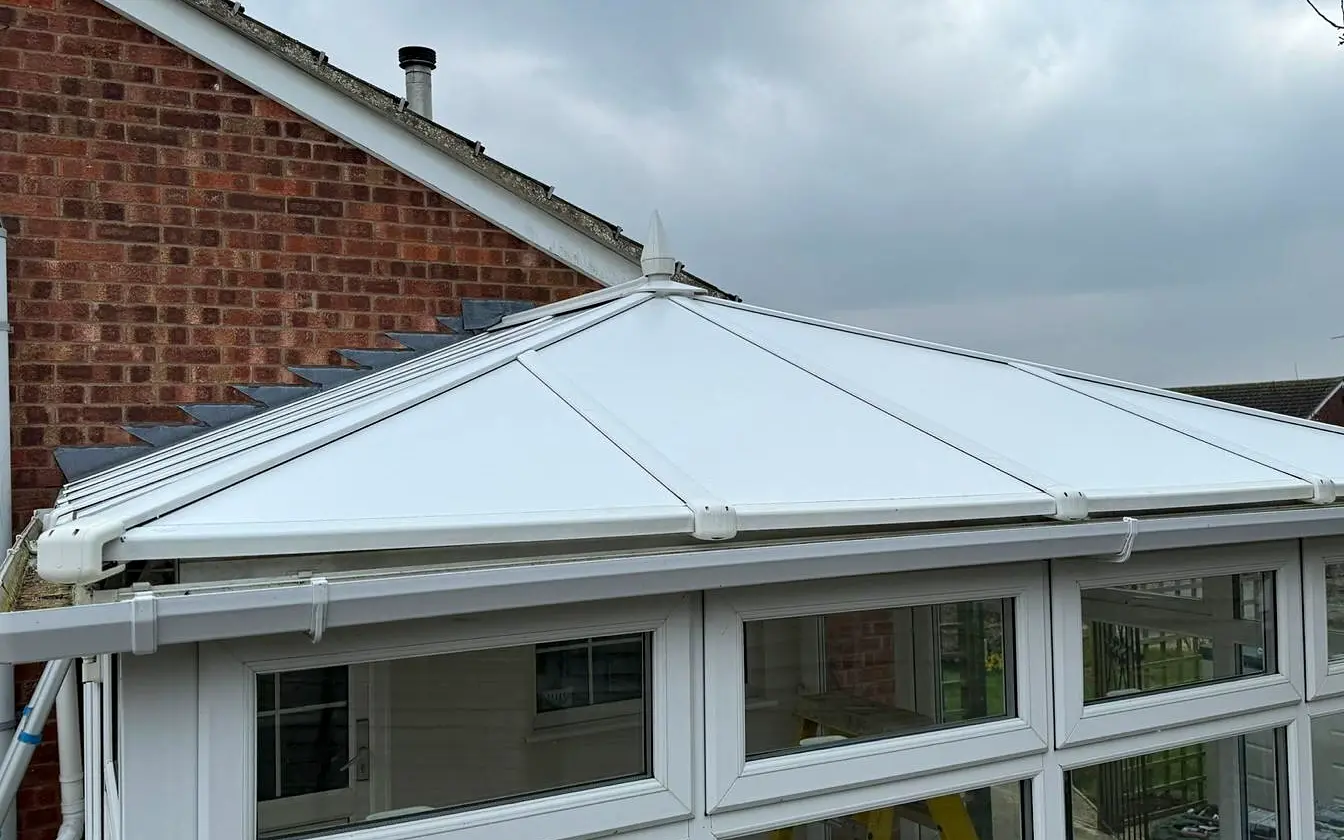
75 mm insulated panel roof
- Holds heat at about 0.43 W/m²K
- Stops high summer sun at the roof line
- Solid white ceiling with room for spotlights
- No published rain noise test exists for it
- Daylight from the glass walls and any roof lights you add
Winter: close, but not level
Put low-e glass at 1.4 and panels at 0.43, and the glass roof loses a little over three times as much heat. On a 15 m² roof with 15 degrees between the sofa and the patio, that works out at roughly 315 watts through the glass and under 100 through the panels. Neither figure is alarming, and both are a big step on from older double glazed roof units at about 2.8.
The gap shows most after dark, when there is no sun to cover the loss. Glass also feels chilly to sit under even when the air is warm, because your body radiates heat up towards a surface cooler than you are. A panel ceiling sits much nearer room temperature. The sums behind all this are on our U-value explainer.
- 0.43
- W/m²K through a 75 mm panel roof
- 1.2 to 1.6
- W/m²K through modern low-e roof glass
- 2.8
- W/m²K through older double glazed roof units
Summer: where glass struggles
Solar control glass bounces back part of the sun's heat, but a glass roof is still a large window aimed at the sky. On a still July afternoon a south facing glass conservatory warms quickly, and blinds hung under the glass only catch the heat once it is already indoors. Panels take that heat on their outer aluminium face, and the foam behind holds it up there, away from the room.
If you mostly sit in the room in the morning, or it faces north, the summer difference narrows and glass starts to look the better buy. If it faces south or west and you want long afternoons in it, the panel roof gives you the calmer room.
Rain sound: give glass its due
Under BRE's lab heavy rain, double glazed laminated roof glass measured 52.0 dB, which is 12.6 dB quieter than 25 mm polycarbonate on the same rig. That is a real difference: 10 dB is commonly heard as about twice as loud. British rain is usually far gentler than the test, and University of Liverpool work on natural rainfall brings glass down to about 33.1 dB in moderate rain on that lab measure.
There is no matching number for a panel roof, because nobody has published one for 75 mm aluminium faced foam conservatory panels and we have not tested ours. The build is solid, with no hollow channels and a bonded foam core, but we will not rank it against glass by any figure. Steel skinned warehouse panels, a different product, are put at 70 to 78 dB in the same lab rain by an acoustic consultant's estimate. Our guide to how loud rain gets on a conservatory roof sets every measured roof on one scale.
Money and the fitting day
Low-e roof glass in sealed units is an expensive material, and each unit is heavy to lift and set, so a new glass roof generally lands above a panel roof of the same size. Our panel roofs start at £3,000 for a small lean-to, £4,000 for a medium room and £5,000 for a large one, fitted, with the shape adding a little; the full cost breakdown shows how much. Most go on in a single dry day, with bigger or fiddlier roofs taking two.
Choosing between them
Pick glass if daylight is the whole point of the room, it faces away from the midday sun and the frame was built to carry glass. Pick panels if the room bakes in summer, chills in winter or does both, and you want it to behave like the rest of the house. If you are caught between the two, panels with a glazed roof light or two set among them keep a square of sky overhead, and the hybrid roof comparison weighs up how much glass to leave in.
Once you know which way you lean, ask us for a panel roof quote. We survey for free, then put a fixed price in writing.