What gets better the week after
The first change is warmth. Each surface of a room bleeds heat at a pace set by its U-value, and the roof is normally the widest piece of the whole shell. Swapping a roof that loses heat four or five times faster for one at 0.43 slows the drain from above, so a radiator or heater has a fighting chance.
The second is summer. Clear and opal sheets let the midday sun straight in and the room bakes by early afternoon. A foam core between two aluminium skins blocks that overhead sun, so the heat that does arrive comes through the side glass instead of the whole ceiling.
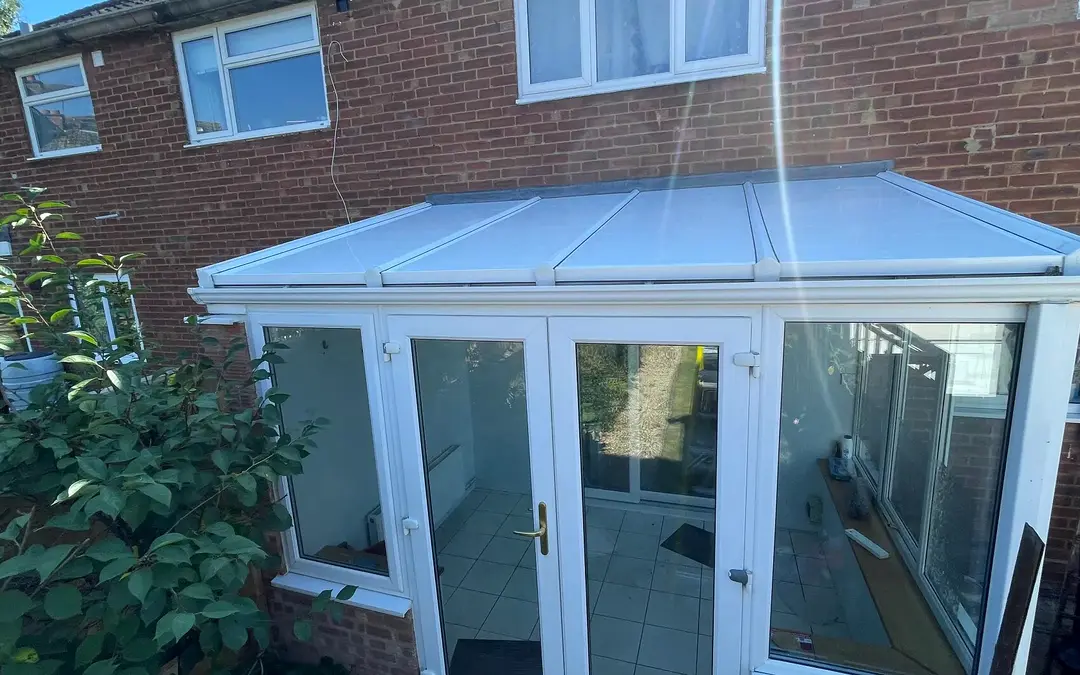
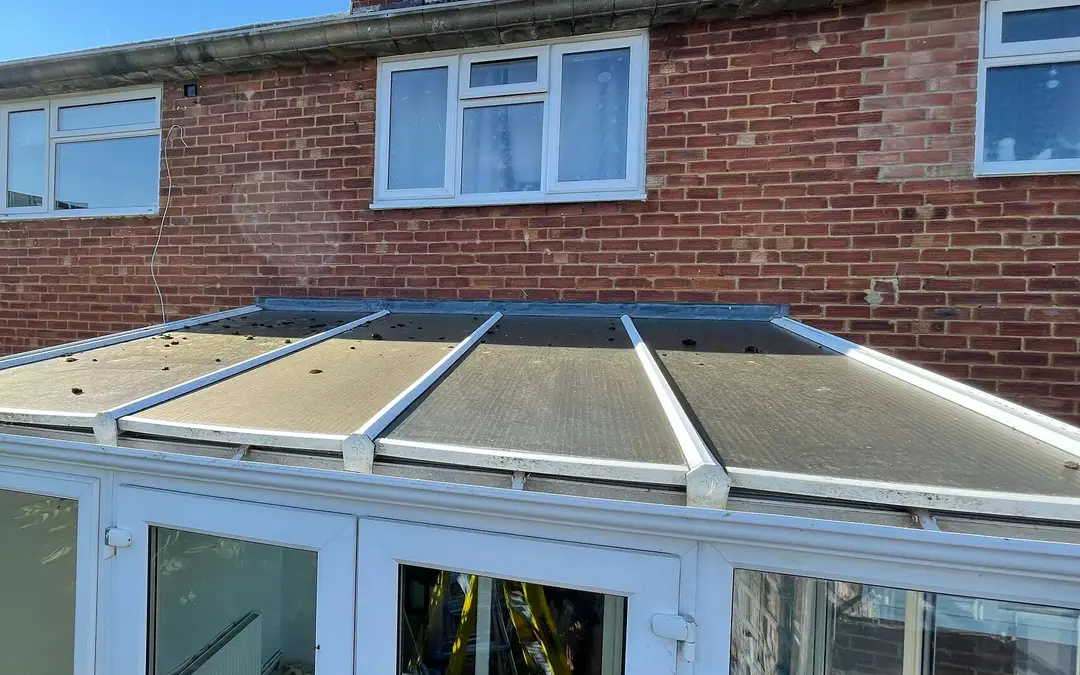
The third is the look of the thing. Dirty flutes, moss lines and yellowed sheets give way to a flat white ceiling inside and a clean roof outside, in white or one of the greys in our panel colour range.

What you give up
Daylight from above is the big one. A panel roof is opaque, so the room is lit by its windows and doors rather than the sky. In a conservatory with low dwarf walls and tall frames that still means a lot of light; in a narrow lean-to boxed in by fences it can feel noticeably dimmer. A glazed roof light gets some of it back, at the cost of a little heat.
You also lose the view of the clouds, which some people like more than they expected. And the roof is a commitment: it is made for your frame, so it is not something you try for a season and send back.
Gains
- Roof U-value about 0.43 instead of 1.6 to 2.8
- No overhead sun cooking the room
- A plain white ceiling, no dirty flutes
- Room for spotlights or a pendant
Losses
- No sky through the roof
- Darker in a hemmed in lean-to
- Glass walls still lose heat as before
- Costs more than new polycarbonate sheets
What a panel roof cannot do
It cannot turn glass walls into brick. Every window and door still loses heat at its own rate, so on a frosty night the room will cool faster than a lounge inside the house. Think of it as closing the largest window, not every window.
It cannot mend a frame that is sagging, rotten or moving. The new roof rests on your current glazing bars, so if those bars or the dwarf wall are failing, the honest answer is a frame repair or a new conservatory first. We check this at the survey and say so.
And it cannot promise a decibel figure for rain. Nobody has published a rain noise test for 75 mm aluminium skinned foam conservatory panels and we have not measured ours. What we can say is how it is built: no hollow flutes to drum, a foam core bonded to both skins, and a solid ceiling below.
When we would tell you to spend less
If the room is used a few weekends a year as a plant house, new polycarbonate sheets may be all it needs. If the frame is sound but you only mind the glare, blinds are cheaper still. If your old double glazed roof is sound and the only problem is a summer heat spike, solar film is worth pricing first.
A panel roof earns its cost when you want to sit in the room most days of the year and the roof is the reason you cannot. A small lean-to starts from £3,000 as a guide, and the full breakdown by size and shape is on the conservatory roof cost page.
How to judge it for your own room
Stand in the conservatory at noon on a sunny day and at nine on a cold evening. If both visits make you leave, the roof is the main culprit and panels will help. If only the evening is the problem, ask yourself how much glass is in the walls, because that part stays.
Then book a survey through our short quote journey. Our surveyor takes the measurements, looks over the frame and writes down a fixed price, with nothing to pay first. If you want to compare against glass or another set of sheets, our panels or new polycarbonate comparison sets the two side by side.