What fills the day
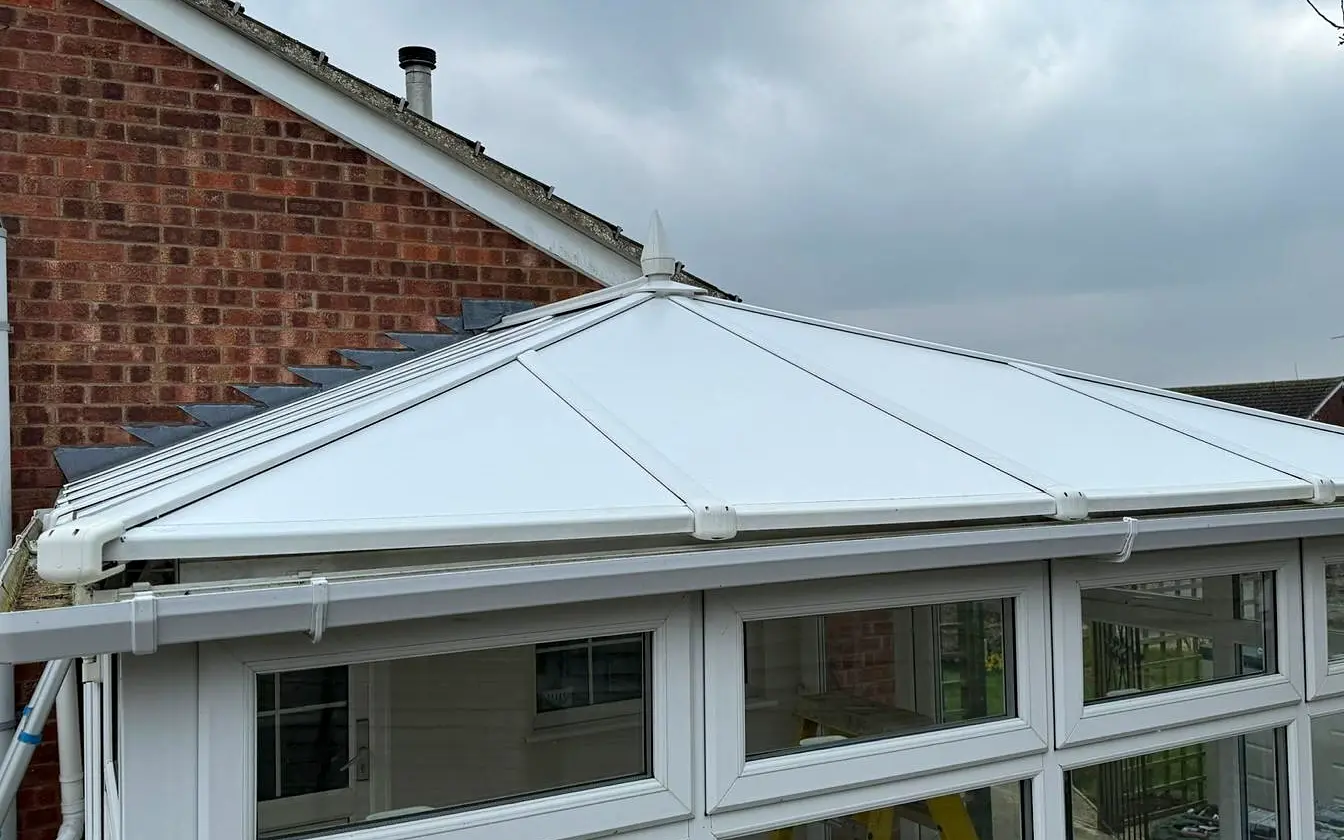
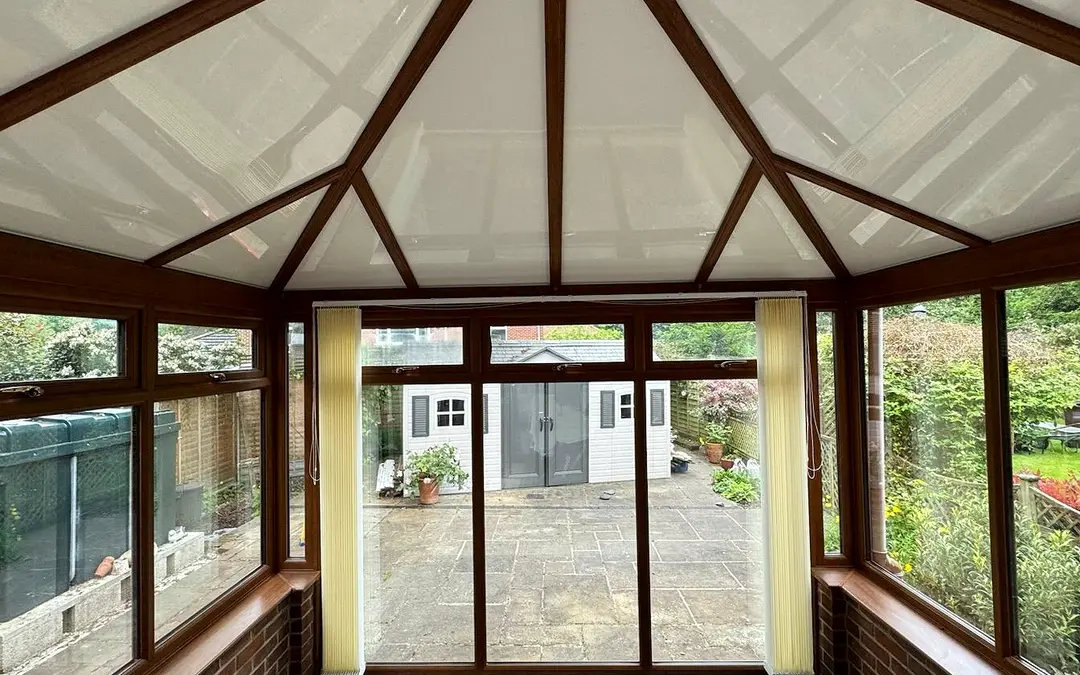
We arrive early, sheet the floor and move anything fragile out of the room. The old roof comes off one section at a time rather than all at once, so if a shower drifts over we can cover the open part and wait. The glazing bars get checked and cleaned as they are exposed, the new panels go on, and every joint is sealed and capped before the next section opens.
By late afternoon the ridge and flashings are finished, the old sheets are in the van for recycling where possible, and the room is swept. Most people have the furniture back in that evening.
A typical fitting day
- Clear and protectDust sheets down, the room emptied of anything you would mind us stepping round.
- Strip a sectionCaps and sheets off one part of the roof, bars cleaned and checked.
- Panels onEach panel set on the bars and fixed while the next part stays closed.
- Seal and capJoints sealed on dry surfaces, then capped, before moving along.
- Ridge and edgesRidge, flashings and gutter edge finished, old roof loaded for disposal.
When it runs to a second day
Size is one reason. A small lean-to is often finished by mid afternoon, while a broad Victorian or P-shape has more facets, more cuts and more joints to seal. Shape is another: a hub, a box gutter or a run against a rendered wall all take longer than a plain lean-to against brick.
The third reason is the frame. If a glazing bar needs packing or a wall plate needs attention, we fix it properly rather than rush it, and that can push the finish into a second morning. The room is weathertight overnight either way.
Our pages on the Victorian roof swap and the P-shaped roof swap go into the extra work those shapes bring.

Why the date depends on dry days
We count a dry working day as one with under 0.2 mm of rain between 8am and 4pm, the Met Office threshold for a rain day. Across the 100 towns in our rain ledger, the average place gets about 263 of those a year, or 72% of all days, and the longest run of them in two years averaged 28 days.
The spread through the year is wide. August is the best month nationally with about 25 dry working days, September the worst at about 19. A winter fitting is perfectly possible, it just means watching the forecast closely and moving the date if it turns.
Pick your own town in the Rain Ledger to see its dry working days month by month.
- 23Jan
- 19Feb
- 22Mar
- 22Apr
- 23May
- 23Jun
- 21Jul
- 25Aug
- 19Sep
- 22Oct
- 21Nov
- 22Dec
dry working days, the three highest picked out. Average of 100 towns, 2024 and 2025. Source: our rain ledger.
From survey to fitting day
The whole process has four stages. The survey comes first: we take measurements, look over the frame and dwarf wall, and talk through colour, roof lights and ceiling lights. A fixed written price follows, with nothing to pay before the survey.
Once you say yes, the panels are made to the survey measurements. How long that takes varies with the season and the order book, so we give you a date when we confirm the job rather than a stock number here. In the run-up to fitting we study the forecast each morning and ring you if the date needs to move.
The fitting process page walks through each stage in more detail.
- 1
- day on site for most roofs
- 2
- days for larger or fiddlier shapes
- 263
- dry working days a year in the average town
What you need to do
Very little. Clear the room of small things, leave us access to the side of the house, and keep the drive or a parking space free for the van if you can. Pets and children are happier elsewhere while the roof is open. You do not need to be in the room all day, though most people put the kettle on at some point.
When you are ready to book, the quote journey takes a couple of minutes.