Reading a Victorian from the garden
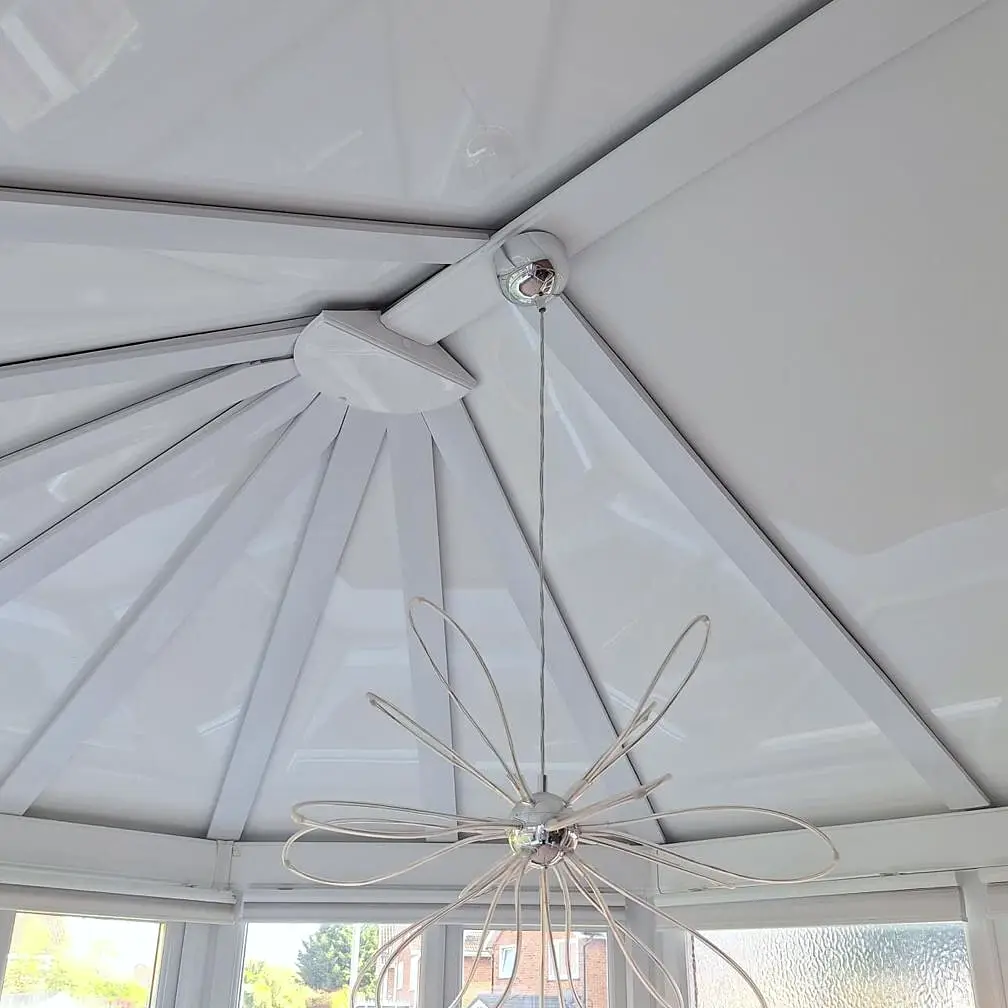
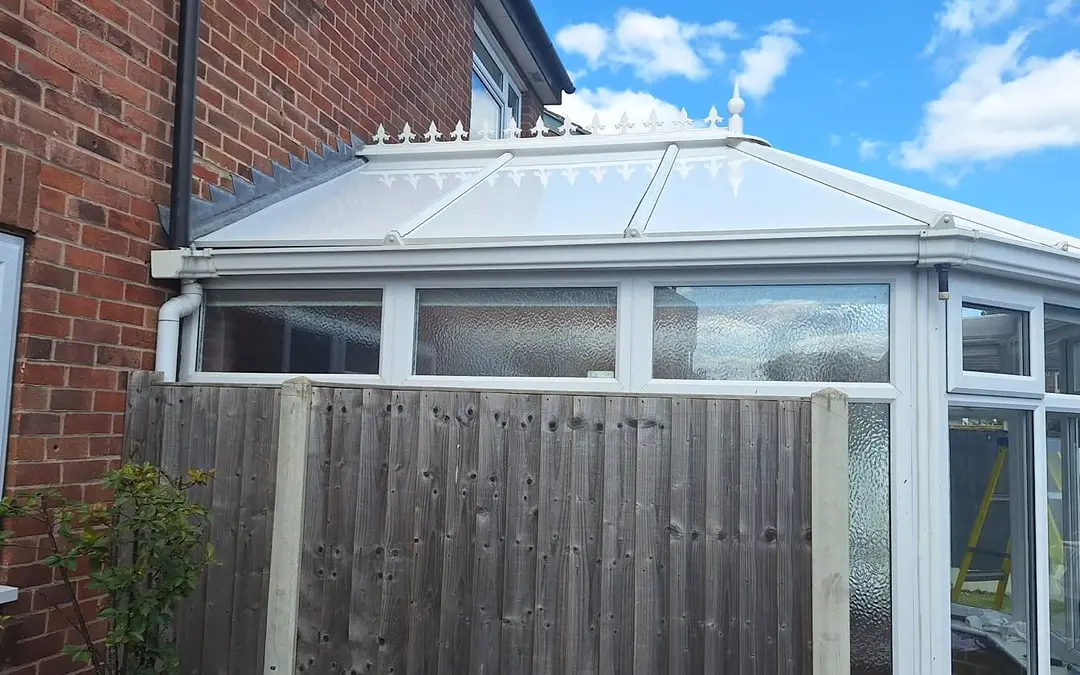
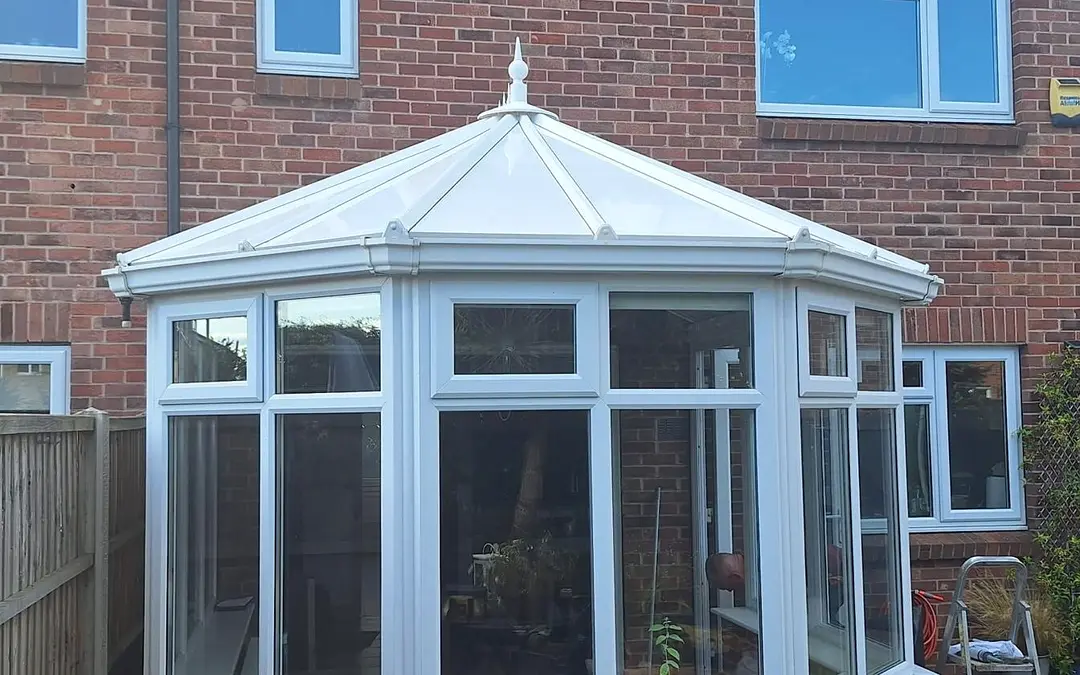
The giveaway is the front. Instead of meeting in a square corner, the glass walls turn in short straight sections, three or five of them, so the room pushes out in a rounded bay. Above it the roof rises in matching facets, and their bars fan inwards and gather where the ridge stops.
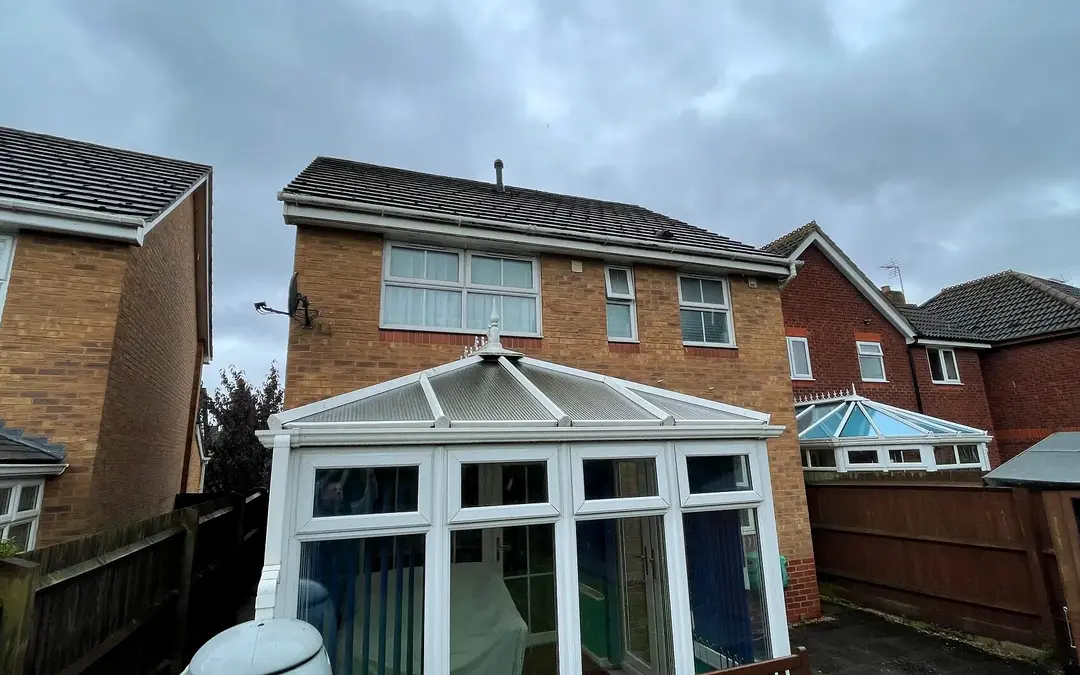
That point is the hub, often hidden under a finial outside and a round boss inside. Many Victorians also carry decorative cresting along the ridge. If your front corners are square and the roof has two straight hips instead of a fan, the Edwardian page is the one you want.
The hub is where the job is won
Every facet panel is a long wedge, wide at the eaves and narrow at the top, and all of them have to arrive at the hub at the right angle and the right height. If one is a few millimetres out, the caps above it will not sit flat. So the hub gets more of our attention than any other part of the roof.
It is also the part an old roof hides worst. Under a plastic hub cover we sometimes find a ring of perished sealant, a cracked boss or a bar that has dropped away from its neighbours. All of that is visible once the sheets are off, and we deal with it before the first panel goes up rather than burying it under a new cap.
Fitting the facets of a Victorian roof
- Strip and checkThe old sheets and hub cover come off, and we check that every radial bar still meets the hub firmly.
- Measure each facetOld frames settle unevenly, so each wedge is measured on the roof, not taken from a drawing.
- Cut and seatPanels are cut to the taper, set on the bars and sealed to their neighbours on dry metal.
- Close the hubThe narrow tips are sealed together at the top, then a hub cap covers the meeting point.
- Cap and crestBar caps clip down over every joint, the ridge cap goes on, and sound cresting and the finial are refitted.
Guide prices for a Victorian panel roof
These figures are the panel roof fitted, before extras. Three facet Victorians usually sit in the small or medium rows; five facet ones with a long ridge often reach large. Your written price is set at the survey, and nothing is paid before then.
Roof lights, spotlights in the ceiling, new gutters and frame repairs are priced after we have seen the roof. Compare with other shapes on the cost page.
| Roof area | Guide from | Guide range | |
|---|---|---|---|
| Small | up to 12 m² | £3,300 | £3,300 to £3,950 |
| Medium | 12 to 25 m² | £4,400 | £4,400 to £5,300 |
| Large | over 25 m² | £5,500 | £5,500 to £6,600 |
How rain leaves a faceted roof
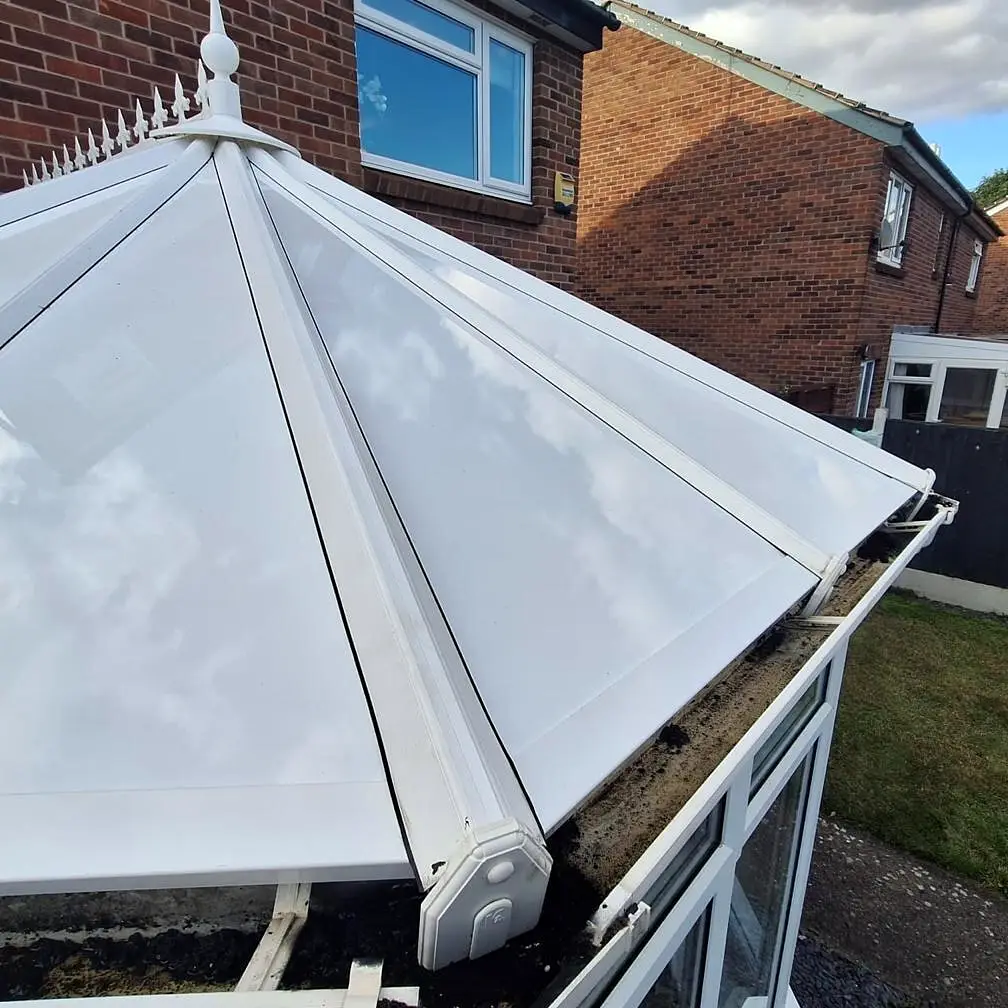
On a Victorian, the hub is the highest point, so water never pools there; it runs outwards and down each facet to its own short length of gutter. The trouble spots are lower: the angled joints between those gutter lengths, where a bay of five facets has four corners for water to find.
Old polycarbonate on a Victorian often leaks at the hub because the sheet ends lift and the seal has perished under years of sun. A sealed panel tip under a solid hub cap removes that weak point, but a tired gutter corner will still drip, so we look at every corner at the survey. The heavy rain leaks page covers how to tell a roof leak from a gutter one.
How long a Victorian roof stays open
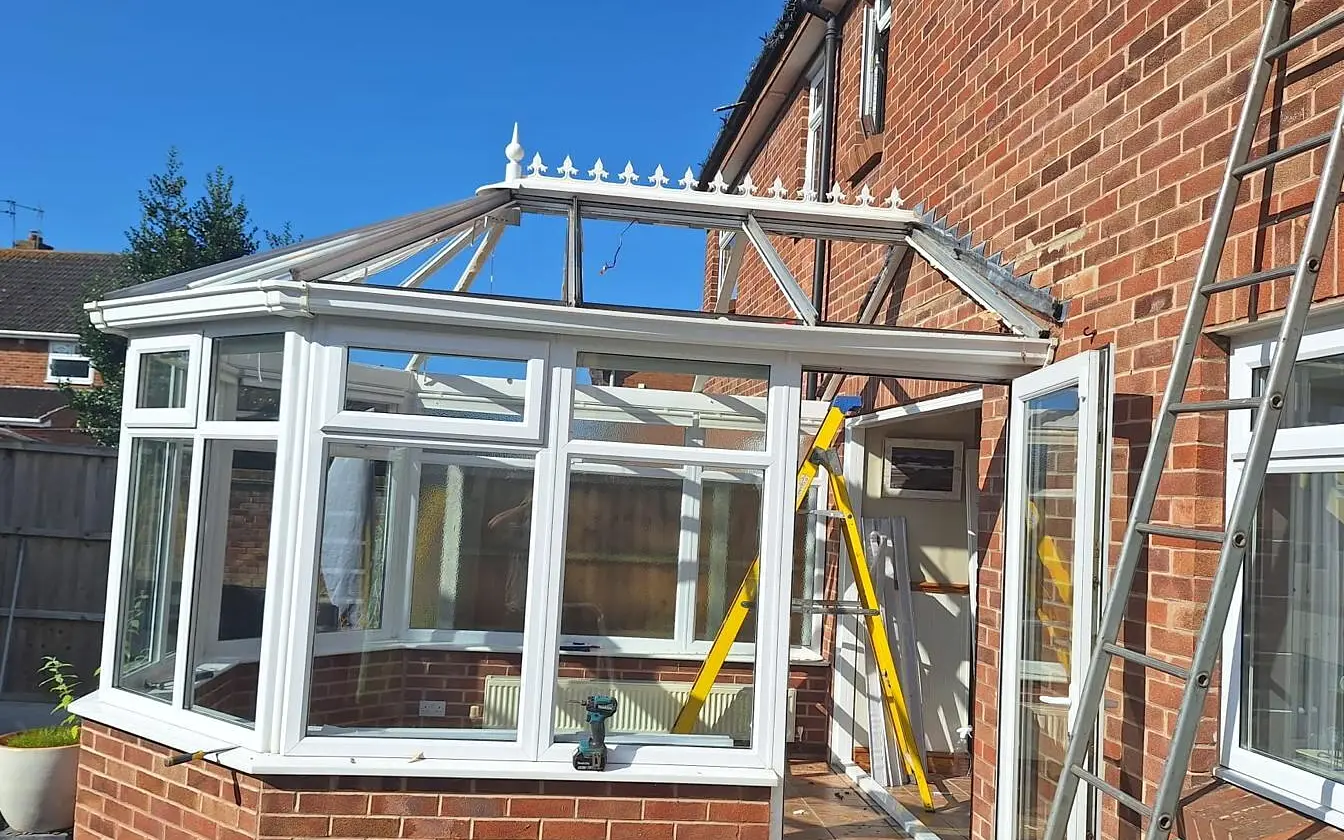
We open one facet, or a pair, at a time and close it in before the next is touched. The hub is the one moment when several facets are open together, so we plan the day to reach it in the driest hours of the forecast. If a shower comes anyway, the open section is sheeted over and we wait.
A standard Victorian is usually sealed and capped the same day; big ones with a long ridge can take two, and we say which at the survey. Your town's pattern of dry working days is in the Rain Ledger, and the fitting process page covers the rest of the day.
Cresting, finials and the ceiling below
If your cresting and finial are sound, they go back on top of the new ridge, so from the street the roof keeps its outline. Inside, the ceiling follows the facets in smooth white panels, which shows off the shape far better than cloudy sheets did. A pendant light hangs well from the hub boss, and spotlights can sit in the facets.
The panels hold heat at about 0.43, against roughly 1.6 to 2.4 for old 25 mm polycarbonate. When you want to see what yours will cost, start a quote.